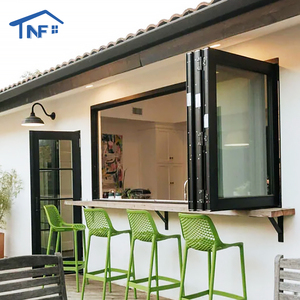
Architectural Precision
Engineered Garden & Architectural Window Collections
Explore our premium factory-direct fenestration portfolio engineered to maximize ambient daylighting, passive thermal efficiency, and panoramic natural aesthetics.
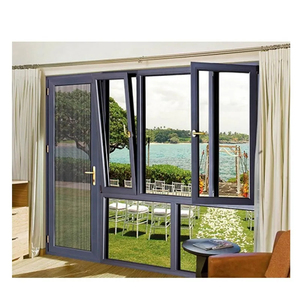
Fuson New Garden Design Aluminium Fly Screen Casement Window With Grill
View Specifications →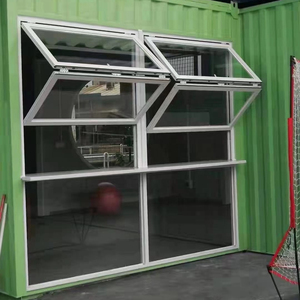
Modern Exterior Vertical Bi-folding Aluminum Alloy Thermal Window
View Specifications →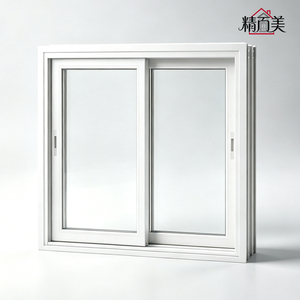
Custom Color Sleek Aluminum Sliding Patio Window with Panoramic Garden View
View Specifications →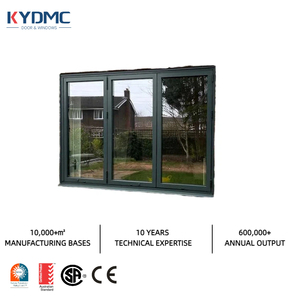
Low E Double Glass Aluminum Black Frame Bifold NFRC Certified Garden Window
View Specifications →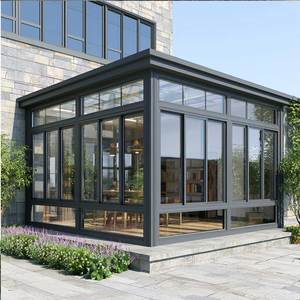
XIYATECH American Style Architectural Aluminum Bay Window Double Glazed
View Specifications →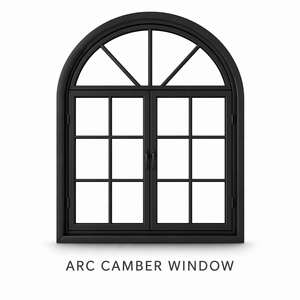
Custom OEM Curved Frame Aluminum External Casement Swing Garden Window
View Specifications →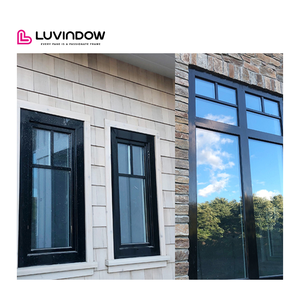
Luvindow Heavy-Duty Tilt & Turn Villa Windows with Multi-Point Security
View Specifications →180,000㎡
Intelligent Industrial Base
25+
Years Fenestration Leadership
100+
Patents & Global Certifications
600+
Specialized Engineers & QC Staff
Technical Whitepaper
Engineering Superiority of Modern Aluminum Garden Windows
A systematic perspective on high-performance fenestration for international architects, façade consultants, and bulk procurement teams.
As modern building envelope codes push toward net-zero targets and strict structural reliability, the contemporary aluminum garden window has evolved far past a simple aesthetic projecting bay. Today, it stands as an intricate structural interface combining microclimate control, greenhouse daylight diffusion, dynamic ventilation, and high-efficiency acoustic attenuation.
Originating from traditional greenhouse bump-out concepts, modern architectural garden windows project outward from exterior wall assemblies to capture solar exposure across three facets. By integrating polyamide structural thermal breaks (PA66GF25), inert argon-filled insulated glass units (IGU), and marine-grade extrusion alloys such as 6063-T5/T6, China's premier manufacturers deliver fenestration systems capable of enduring severe coastal wind loads, high seismic drifts, and extreme regional UV indices.
| Performance Parameter | Standard Market Specification | DERCHI Heavy-Duty Engineering Spec | Operational Benefit |
|---|---|---|---|
| Profile Wall Thickness | 1.2 mm - 1.4 mm Non-Thermal | 1.8 mm - 2.2 mm Extruded 6063-T6 | Deflection resistance under cyclic wind pressures > 3.0 kPa. |
| Thermal Transmittance (U-Value) | Uf > 3.5 W/(m²·K) | Uf ≤ 1.4 W/(m²·K) (Triple Glazed Low-E) | Significant HVAC load reduction compliant with CE, NFRC & AS2047. |
| Air Permeability & Water Ingress | Class 2 / 300 Pa | Class 4 (ASTM E283) / ≥ 600 Pa (ASTM E331) | Impermeable defense against monsoon downpours and driving air storms. |
| Hardware & Load Capacity | Basic Friction Hinges (35kg max) | German Multi-Point Locking & Heavy Pivot (≥120kg) | Anti-sag shelf integrity, anti-burglary RC2 security rating. |
Market Intelligence
Future Procurement Trends in Global Fenestration (2025–2030)
Key strategic shifts institutional importers, building material distributors, and real estate developers must navigate.
Consolidated Carbon Footprint Sourcing
Global procurement directives (such as the EU CBAM and US Green Building mandates) require fenestration exporters to provide Environmental Product Declarations (EPD). Tier-one buyers are aggressively prioritizing China manufacturers using low-carbon certified secondary aluminum billets powered by hydro-energy smelting, ensuring long-term tariff compliance.
Pre-Engineered Complete Envelope Systems
Instead of piecemeal purchasing of frames, glass, and fly screens, procurement models have pivoted decisively to fully assembled, factory-glazed packages. Factory-certified installation tolerance guarantees structural water tightness and relieves expensive skilled labor bottlenecks across overseas building sites.
Integrated BIM & Digital QC Validation
Forward-thinking developers demand native Revit/BIM structural models upfront alongside third-party digital test traceability. Importers demand end-to-end digital audit access—from raw material spectrophotometer spectral analysis to packaging stress inspections—prior to container loading.
Innovation Trajectory
Technological Developments in Aluminum Window Manufacturing
Continuous evolution in metallurgic durability, insulated glass design, and structural kinematics.
Advanced Surface Treatment: Fluorocarbon & Qualicoat
Traditional powder finishes deteriorate under harsh UV exposure. Modern export manufacturing utilizes advanced PVDF (Fluorocarbon) electrostatic coating and Class 2 / 3 Qualicoat certified finishes, retaining gloss and color stability over a 25-to-30-year lifecycle even in extreme marine environments.
Photovoltaic & Dynamic Electrochromic Glazing
Next-generation garden windows serve as productive building envelopes. By integrating smart switchable electrochromic glass and Building-Integrated Photovoltaics (BIPV) into project roof slates, residential spaces actively minimize glare while generating localized solar yield.
CNC Micro-Milling & Corner Joint Injected Crimp
Eliminating thermal leakage begins with corner construction. Utilizing automated 5-axis CNC machining, cast aluminum corner cleats receive dual-component structural polyurethane injection, providing absolute structural rigidity, air tightness, and seismic resilience.
The Manufacturer Advantage
Why Tier-1 Importers Partner with Guangdong Dejiyoupin (DERCHI)
Combining world-scale manufacturing infrastructure with rigorous global engineering accreditations.
180,000㎡ Mega Facility
Headquartered in Foshan, China's core aluminum manufacturing capital, our massive scale allows comprehensive profile extrusion, powder coating, double/triple IGU glass tempering, and hardware integration under one synchronized roof.
International Certifications
Tested and audited across top world testing standards: Australian AS2047 (N6 cyclone rating), American NFRC, European CE, UL fire ratings, ISO9001, FCC, and RoHS, allowing streamlined project approval in international jurisdictions.
Complimentary CAD/BIM Detailing
Our dedicated engineering department provides project-specific structural review, seismic calculations, wind-load analysis, and full architectural shop drawings prior to extrusion, preventing costly site modifications.
Export Crate Packaging
Every fenestration unit undergoes rigorous multi-layer protection: protective polymer films, corner edge protectors, waterproof wrapping, and fully enclosed IPPC-certified fumigated steel-reinforced plywood ocean crates.
Knowledge Center
Procurement & Engineering FAQ
Authoritative technical and logistical answers for project managers, quantity surveyors, and international distributors.
What alloy and temper specifications are used for garden window frames?
We exclusively utilize virgin primary aluminum 6063-T5 or 6063-T6 architectural grade alloys. Wall thickness ranges from 1.6 mm to 2.2 mm depending on the span and cyclic wind load requirements. In coastal or storm-prone zones, 6061-T6 structural reinforcements are incorporated into vertical mullions to meet deflection criteria under positive/negative wind pressures exceeding 3,500 Pa.
How do aluminum garden windows maintain condensation resistance in cold climates?
Condensation is eliminated using a three-tier system: (1) Integrating high-density PA66GF25 (polyamide fiberglass reinforced) thermal barriers to stop structural thermal bridging; (2) Applying warm-edge silicone structural glass spacers; and (3) Inset condensation drainage channels with integrated weep valves that expel moisture while resisting exterior water head pressure.
What international testing certificates and reports can you furnish for building authorities?
Our products hold full testing documentation covering CE (EN 14351-1), Australian Standard AS2047 / AS1288 (including N6 extreme water and acoustic test passes), American NFRC thermal performance ratings, and ISO9001 certified manufacturing audits. Comprehensive mill test certificates (MTC) and spectral transmittance data for glazing are provided with every export manifest.
Can multiple product categories be consolidated into a single factory container?
Yes. As an integrated manufacturer, we consolidate aluminum garden windows, panoramic bifold systems, entry doors, commercial pivot systems, and interior wooden doors within unified shipping containers. Custom export crating is CAD-planned according to internal container cubic volume to prevent transit damage and drastically reduce handling and demurrage costs.
What is your production lead time and ocean export protocol?
Standard OEM/ODM architectural production cycles require 20 to 30 days after shop drawing sign-off and color chip approval. Ocean cargo documentation, export customs clearance, Fumigation certificates, and marine cargo insurance are handled end-to-end under standard FOB, CIF, or DDP incoterms to ports across the Americas, Europe, Australia, and the Middle East.