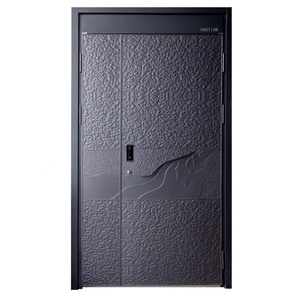
Precision Engineering
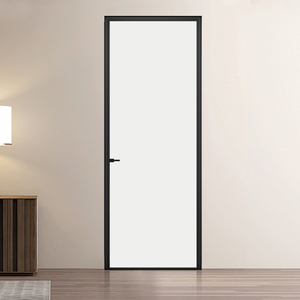
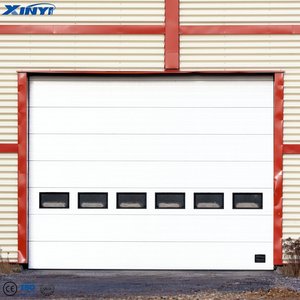
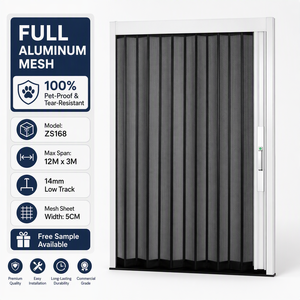
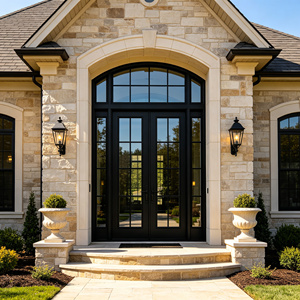
Featured Fenestration & Entrance Systems
Direct factory production certified under AS2047, CE, and ISO9001 protocols. Each profile is structural-grade aluminium engineered for extreme weather resistance, acoustic attenuation, and architectural longevity.
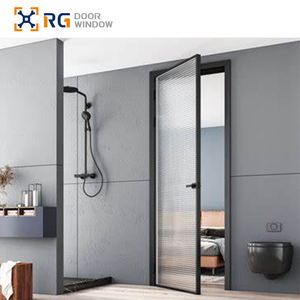
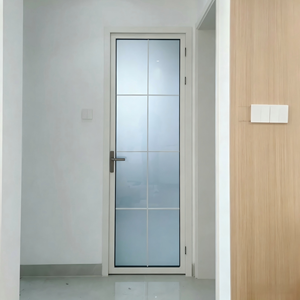
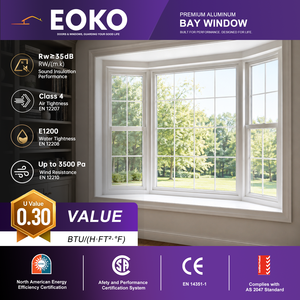
Enterprise Manufacturing Power
World-Class Manufacturing Base in Foshan, China
Operating under Guangdong Dejiyoupin Doors and Windows Co., Ltd. (DERCHI), our facility serves general contractors, developers, and distributors across the globe with precision architectural envelope products.
25+
Years Engineering Experience
180,000㎡
Production Complex
600+
Specialized Technicians
100+
Global Patents & Certifications
Stringent Quality Accreditations
DERCHI products conform to international benchmarks, holding CE, ISO9001, AS2047 (Australia), and UL fire-rated certifications. Our vertical sash and architectural fenestration test records detail structural wind loads exceeding 3000 Pa, ensuring complete compliance with global building envelopes.
100% Turnkey OEM / Bespoke BIM
Our dedicated engineering department prepares free CAD shop drawings, wind-deflection evaluations, and BIM object models tailored directly to architectural specifications. From oversized vertical hung layouts to multi-track sliding dynamics, your exact tolerances are factory-tested.
Export-Grade Ocean Freight Packaging
Cross-continental shipping risks are eliminated with five-tier packaging: anti-scratch protective film, corner buffering guards, closed-cell pearl foam padding, moisture-barrier wrapping, and fumigated solid timber export crates, guaranteeing zero-defect on-site delivery.
Industry Whitepaper
The Engineering Evolution of Aluminium Vertical Sliding Windows
Technical insights, aerodynamic sash counterbalance mechanisms, and metallurgic considerations for modern building envelopes.
Vertical sliding windows—frequently designated in commercial architecture and heritage retrofitting as vertical hung, double-hung, or guillotine sliding systems—represent a pivotal intersection between classical architectural balance and high-performance contemporary facade engineering. Historically dominated by timber joinery susceptible to warping and atmospheric degradation, or hollow uninsulated vinyl systems lacking static integrity, modern architectural demands have driven the fenestration sector toward extruded 6060-T66 and 6063-T6 architectural aluminium alloys.
Leading Chinese manufacturing hubs, spearheaded by Foshan-based conglomerates such as Guangdong Dejiyoupin Doors and Windows Co., Ltd. (DERCHI), have rewritten global supply chain economics by coupling integrated smelting, precision polyamide thermal breaks, and automated CNC multi-axis milling to deliver vertical sliding assemblies with unrivaled static and acoustic ratings.
1. Advanced Sash Counterbalance Technologies
The primary mechanical vulnerability of heritage vertical sliders has traditionally been hardware failure: worn cotton sash cords, fatigued cast-iron counterweights, and defective friction shoes. Top Chinese export manufacturers have transitioned completely to torsion spring, block-and-tackle, and constant force helical spiral balances calibrated precisely to the mass of the insulated glass unit (IGU).
In modern double-hung systems engineered for high-rise commercial structures and high-wind coastal developments, DERCHI deploys heavy-duty constant force balances tested up to 50,000 duty-cycles without spring rate decay. This guarantees feather-light fingertip operation on structural sashes weighing upwards of 90 kg, simultaneously enabling interior-tilt safety mechanisms that permit exterior pane maintenance entirely from within the interior habitable space.
2. Polyamide Thermal Barriers & Hygrothermal Efficiency
High thermal conductivity is aluminium’s greatest challenge. Contemporary building codes—such as ASHRAE 90.1, Title 24, and European EN 14351-1—mandate strict entire-window thermal transmittance (U-factors below 1.4 W/m²K). To exceed these thresholds, modern aluminium vertical sliders utilize polyamide 6.6 reinforced with 25% glass fibre (PA66 GF25) thermal struts.
These struts physically isolate the exterior and interior extruded chambers, truncating conductive heat loops. Combined with warm-edge composite spacers, argon gas fills, and soft-coat dual Low-Emissivity glass matrices, modern vertical sliding systems effectively mitigate condensation risks in high-humidity locales (such as coastal Latin America and Southeast Asia) while arresting winter heating loss in sub-zero zones.
3. Multi-Chamber EPDM Continuous Gasketing
Unlike casement windows that compress gaskets perpendicular to the frame on closing, sliding systems must seal along dynamic friction planes. Inferior fabricators rely on inexpensive polypropylene wool-pile brush seals, which degrade under intense UV exposure and leak air after limited seasons. Premium Chinese exporters utilize continuous multi-fin co-extruded EPDM weather-stripping enhanced with micro-cellular silicone lubricants. This achieves water penetration resistance under static test pressures exceeding 450 Pa and reduces air filtration rates down to < 0.1 m³/(h·m), guaranteeing peak energy performance.
Strategic Procurement Horizons
Emerging Trends in Global Architectural Fenestration Sourcing
How high-yield developers, façade consultants, and bulk distributors are structuring cross-border fenestration agreements for 2026 and beyond.
Electrified & Smart Building Integration
Global procurement manifests an accelerated shift toward motorized, smart-actuated vertical sliding facades. Modern commercial towers and luxury estates demand concealed DC motor drives tied directly to BACnet or Modbus home automation systems, enabling automated night purge cycles, climate-controlled airflow, and rain-sensor sash closures.
Direct-from-Source Container Consolidation
Developers are bypassing intermediary brand-assemblers. By sourcing entire fenestration packages—including vertical sliding sashes, large pivot entrance doors, and panoramic pocket sliders—from single integrated entities like DERCHI, purchasers lower shipping volume waste, consolidate import tariffs, and guarantee finish consistency across powder-coated surfaces.
Ultra-Slim Sightlines & Structural Glazing
Architectural taste increasingly favors concealed meeting stiles and minimalist frames. Leading factories are utilizing structural silicone glazing (SSG) directly to thermal-break aluminium extrusions, maximizing natural visible light transmittance (VLT) while meeting severe hurricane and seismic displacement requirements.
Procurement Clarity
Frequently Asked Questions for Window Importers & Contractors
Critical technical details regarding compliance, structural limits, glass specifications, and FOB/CIF logistical processing.
What structural wind-load and water-tightness certifications do your windows hold?
DERCHI aluminium fenestration products are rigorously engineered and tested according to international standardizations, including AS2047 (tested up to N6 deflection ratings), CE EN14351, and ISO9001. We provide certified laboratory testing documentation covering air permeability, static and dynamic water tightness (up to 450+ Pa), and ultimate wind-load resistance (up to 3300 Pa) for client engineering submission.
How do you address salt spray corrosion in coastal export markets?
For coastal deployments in regions like Brazil, Peru, Chile, or the Caribbean, we treat our 6063-T5/T6 aluminium alloys with specialized Qualicoat-certified fluorocarbon (PVDF) architectural finishes or marine-grade anodizing (minimum 20–25 microns). All screws, fasteners, sash lock pins, and counterbalance components are constructed from high-tensile 304 or 316 stainless steel to eliminate galvanic oxidation and pitting corrosion.
Can sash sizes, glass compositions, and counterbalance balances be fully customized?
Yes. Every order is manufactured strictly according to the architectural window schedule. Glass configurations include double or triple Low-E tempered, laminated acoustic panes, argon gas filling, and tinted UV-filtering interlayers. Our engineering team calculates the specific glass weight and assigns calibrated helical spiral balances or heavy-duty block-and-tackle balances to guarantee effortless operation.
What is the typical production lead time and ocean packaging protocol?
Standard OEM fabrication cycles range from 25 to 35 days following approval of CAD shop drawings. For export, windows are cleaned, labeled by unit/room tag, protected with peel-off PE film, cushioned at every corner, encased in high-density EPE pearl foam, and packed in reinforced, steel-strapped fumigated timber crates suitable for rough sea transit.
Do you provide technical shop drawings and site installation guidance?
Yes. Our in-house engineering team provides complete 2D/3D CAD shop drawings, anchoring elevations, and structural connection diagrams for client sign-off before manufacturing commences. Following arrival, we deliver comprehensive installation manuals and offer remote, live video assistance to guide local installation teams through sub-frame anchoring and gasket fitting.
Direct Sourcing from Foshan’s Foremost Fenestration Facility
Whether you are an architect detailing custom fenestration schedules or a volume distributor seeking verified Tier-1 Chinese manufacturing power, DERCHI guarantees engineered precision, verified testing data, and seamless international port delivery.