NFRC Certified
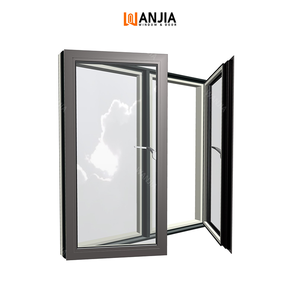
Engineered to exceed strict international fenestration standards (NFRC, CE, AS2047, AAMA), our product lines combine precision structural alloys, thermal polyamide breaks, and advanced multi-point architectural locking hardware.
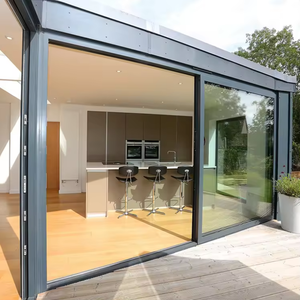
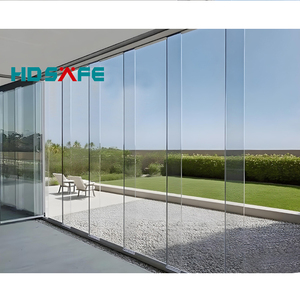
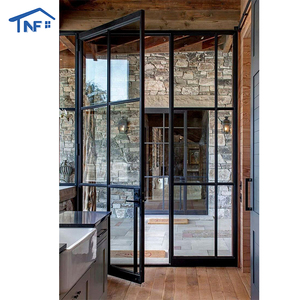
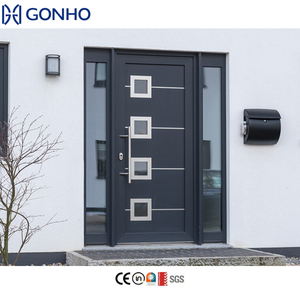
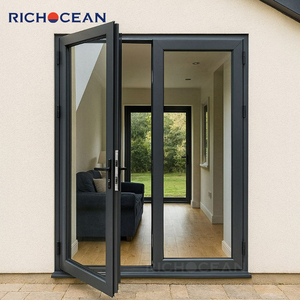
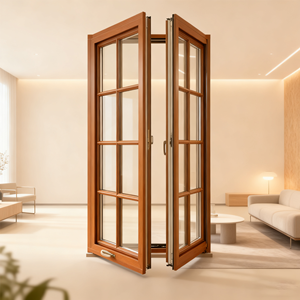
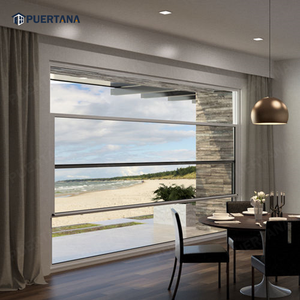
In modern architectural fenestration, the search query "China top aluminium standard doors factories & factory" is no longer merely an inquiry for base-level commodity manufacturing. International general contractors, commercial facade engineers, and high-volume regional distributors require high semantic clarity: Where are the genuine Tier-1 source manufacturers located? How do their metallurgical extrusions hold up against salt-spray corrosion? And how can a direct procurement framework reduce landed risk while complying with rigorous building standards such as ASTM, AAMA, AS2047, and EN 14351-1?
China's aluminium fenestration manufacturing cluster is heavily anchored in Foshan, Guangdong Province—recognized globally as the primary epicentre of precision aluminium profile extrusion, fluorocarbon coating, and high-performance architectural door assembly. Within this industrial matrix, elite operators like Guangdong Dejiyoupin Doors and Windows Co., Ltd. (DERCHI) operate extensive smart production centers spanning over 180,000 square meters. These facilities bridge the gap between scale-driven cost advantages and strict German/North American engineering tolerances.
Top-tier factories refuse scrap melt. Only primary A00 ingot melts conforming strictly to GB/T 5237 and ASTM B221 are utilized, ensuring optimal tensile strength, elongation yield, and structural load compliance.
Employing European standard Polyamide (PA66 GF25) techno-polymer insulating struts over inferior PVC strips. Guarantees shear resistance, minimal expansion differential, and optimal thermal transmission values (U-values < 1.4 W/m²K).
Surface finishing compliant with AAMA 2604/2605 specifications. Electrostatically applied fluorocarbon (PVDF) and AkzoNobel Qualicoat powder coatings provide 30-year resistance against severe coastal salt spray and high UV radiation.
Procuring "standard" aluminium doors from a premier Chinese factory does not signify compromise or rigidity. In modern industrial nomenclature, standard doors represent modularized systems designed around standardized structural profile depths (e.g., 65mm, 70mm, 80mm, and 120mm thermal systems). These systems maintain universal hardware routing grooves (European standard C-groove) while allowing flexible adaptations in opening dimensions, glazing units, and opening typologies—including casement, inward tilt-and-turn, heavy-duty lift-and-slide, multi-leaf bifold, and oversized balanced pivot systems.
Guangdong Dejiyoupin Doors and Windows Co., Ltd. (DERCHI) deploys state-of-the-art German 5-axis CNC processing centers, automated corner-crimping equipment, and robotic dual-component silicone glazing lines. This vertical integration guarantees dimensional accuracy within ±0.5mm across high-volume production schedules.

Commercial developers, procurement executives, and institutional architects are navigating rapidly evolving regulatory frameworks. Sourcing decisions over the next decade will be governed by four pivotal shifts:
Transitioning to hydropower-smelted low-carbon aluminium extrusions with verified Environmental Product Declarations (EPD) to satisfy LEED and BREEAM certifications.
Triple and quadruple glazing configurations filled with Argon or Krypton gas, warm-edge composite spacers, and multi-cavity aerogel insulation reaching U-values below 0.8 W/m²K.
Concealed multi-point motorized locking, seamless integration with building management systems (BMS), biometric recognition, and smart glass electrochromic privacy switching.
Rising global coastal storm intensities require doors engineered to withstand 5000+ Pa cyclic wind pressures and large-missile impact testing (Miami-Dade / ASTM E1886/E1996 standards).
The technological horizon of standard and bespoke aluminium doors manufactured in China has outpaced traditional market expectations. What used to be expensive bespoke European engineering is now integrated into standard production workflows across Foshan's premier facilities:
Engineered with concealed outer sash frames and central interlock profiles slimmed down to 20mm–25mm, maximizing transparent glass surface areas while maintaining high moment of inertia (Ix) structural ratings.
Precision hydraulic heavy-load floor springs capable of effortlessly balancing single door sashes exceeding 500kg and heights up to 6 meters with frictionless self-closing dynamics.
Vertical motorized sliding systems operating on synchronized chain or steel cable transmissions with integrated safety sensors, transforming residential patios and commercial dining perimeters.
To assist specifiers, quantity surveyors, and project engineers in drafting tender documentation, the following matrix benchmarks the performance parameters of standard aluminium door systems from top Chinese factories against global testing standards:
| Performance Characteristic | Test Methodology / Standard | Commercial Grade Specification | Luxury / Hurricane Class Spec |
|---|---|---|---|
| Aluminium Alloy / Temper | GB/T 5237 / ASTM B221 | 6063-T5 High Purity | 6063-T6 / 6061-T6 Structural |
| Profile Wall Thickness | EN 12020-2 / AAMA 101 | 1.8mm – 2.0mm Heavy Duty | 2.2mm – 3.0mm Architectural Reinforcement |
| Thermal Insulation (U-Value) | ISO 10077-2 / NFRC 100 | 1.8 – 2.2 W/(m²·K) | 0.8 – 1.3 W/(m²·K) (Passivhaus Tier) |
| Air Infiltration Rating | ASTM E283 / EN 12207 | ≤ 0.1 cfm/ft² (Class 3) | ≤ 0.05 cfm/ft² (Class 4 / Airtight) |
| Water Penetration Resistance | ASTM E331 / EN 12208 | 450 Pa – 600 Pa | 900 Pa – 1200 Pa (Submerged Sill Test) |
| Structural Wind Load (Cyclic) | ASTM E330 / AS 4055 | 2500 Pa (Serviceability) | 5000+ Pa (Ultimate Hurricane Limit) |
| Acoustic Attenuation (Rw / STC) | ISO 717-1 / ASTM E413 | Rw 32 dB – 36 dB | Rw 42 dB – 48 dB (Triple Laminated) |
| Hardware Cycle Durability | EN 1191 / AAMA 910 | 100,000 Operating Cycles | 200,000+ Operating Cycles |
Combining 25+ years of fenestration manufacturing mastery with deep international export experience, Guangdong Dejiyoupin (DERCHI) eliminates middleman markups, secures project schedules, and ensures strict quality accountability.
Consolidate your entire bill of materials—entrance pivot doors, thermal break casements, hurricane sliding partitions, solid wood interior suites, and smart garage doors—into unified sea freight containers to cut logistics overhead and port handling fees.
Every fenestration batch undergoes traceable quality checks matching CE, ISO9001, AS2047 (Australian N6 maximum tier), NFRC, and UL fire-rated standards. Comprehensive test laboratory documentation is supplied directly to your site engineer.
Our 50+ in-house structural facade engineers develop full shop drawings, wind load calculations, thermal performance simulations, and anchor detail plans free of charge before production begins, eliminating site installation mismatches.
Operating from Shishan Town, Nanhai District, Foshan—the world capital of aluminium extrusion—we enjoy direct upstream access to primary smelters, chemical powder coating giants, and German hardware brand logistics hubs.
Standard packaging includes protective PVC filming, multi-layer closed-cell EPE foam, reinforced corner guards, and fully fumigated IPPC solid plywood crates designed to endure maritime transit and rough transshipment.
Take advantage of our high-definition 360° VR digital factory tours or book scheduled video quality audits with our QA engineers to inspect precision mitering, corner seal injection, and glazing alignment in real time.

Essential technical, logistical, and commercial considerations addressed by our Senior Technical Sales Engineers.
Verify primary physical factory assets: authentic manufacturers will readily provide an ISO9001 quality certificate registered under their exact corporate name, host an interactive 360° VR workshop tour, show factory videos featuring heavy CNC double-head saws and corner-crimping lines, and welcome third-party inspections (e.g., SGS, TÜV Rheinland) prior to balance payment.
For residential interior partitions, 1.4mm may suffice; however, for heavy-duty exterior swing or sliding doors subjected to wind pressure, international codes (such as AAMA/WDMA/CSA 101/I.S.2/A440 and AS2047) recommend a minimum structural profile wall thickness of 2.0mm. Commercial high-traffic entrances should specify 2.5mm to 3.0mm at high-stress anchor points.
Polyamide PA66 reinforced with 25% glass fiber matches the coefficient of thermal expansion of architectural aluminium profiles. This prevents internal stress, delamination, or bowing during extreme temperature swings between scorching exteriors and air-conditioned interiors, ensuring long-term structural integrity and airtightness.
Anodized coatings (minimum 20–25 microns) or fluorocarbon PVDF finishes (conforming to AAMA 2605 specifications with 70% Kynar 500 / Hylar 5000 resin) are mandatory. These systems withstand 3,000 to 5,000 hours of accelerated neutral salt spray testing without blistering, chalking, or adhesion loss.
Yes. Because top Chinese manufacturers employ flexible CNC computer-assisted manufacturing, standard door systems utilize uniform profile cross-sections and hardware routing dies while cutting lengths are tailored to your architectural rough openings without surcharges or custom tooling delays.
We provide full EXW, FOB (Shenzhen/Guangzhou/Foshan), CIF, and DDU/DDP terms to major global deep-water ports across North America, South America (Santos, Callao, San Antonio, Buenaventura), Europe, Australia, and the Middle East, including consolidated container stuffing with custom-fitted protective steel-strapped crates.
Every frame is wrapped with electrostatic peel-off tape and high-density foam buffers. Sashes with glass are packed into custom-built, fumigated plywood cases with internal rubber shock-absorption beds. Desiccant packs are enclosed within moisture-barrier foils to prevent maritime vapor staining.
We provide a comprehensive 10-year structural warranty on aluminium profile extrusions and surface finishes, alongside a 5-year guarantee on mechanical hardware components (such as Siegenia, GU, CMECH, or HOPPE systems), backed by fast-track air dispatch of replacement hardware whenever required.