Engineering Lineup
Architectural Aluminium Windows & Entry Systems
Engineered for extreme wind loads, high thermal efficiency, and contemporary aesthetics across residential and commercial developments.
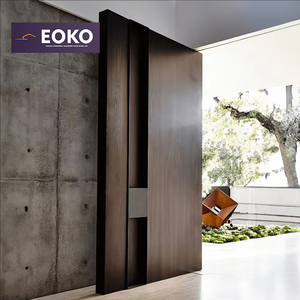
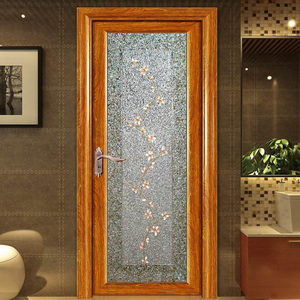
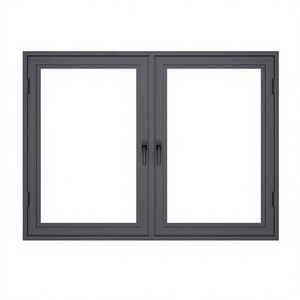
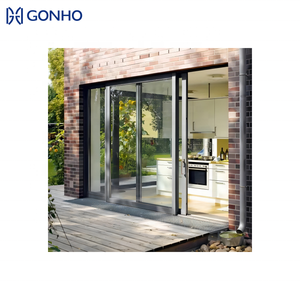
180,000㎡
Intelligent Production Base
25+
Years Fenestration Engineering
100+
Patents & Global Certifications
600+
Technical & Production Staff
Manufacturing Authority
Factory Capabilities & Export Infrastructure
Based in Foshan, Guangdong—the core of global aluminium processing—we integrate automated extrusion lines, thermal break injection, precision CNC milling, and multi-layered quality validation.
Tier-1 Global Compliance
Our complete fenestration assemblies are engineered and independently tested to comply with Australia's AS2047 (N6 cyclone rating), CE structural and thermal guidelines, and UL fire standards, enabling smooth permitting for international development projects.
One-Stop Container Consolidation
Streamline import schedules by pairing high-performance aluminium casement and sliding windows with front entry doors, cast aluminium villa gates, garage doors, and interior partitions inside consolidated ocean freight containers to optimize landing tariffs.
Engineering CAD & BIM Support
Our in-house technical team produces free detailed shop drawings, wind load deflection calculations, glass thermal stress evaluations, and installation anchor details aligned with specific regional building envelopes before fabrication commences.
Engineering Insight
Architectural Aluminium Fenestration Trends & Procurement Analysis
A technical whitepaper examining structural alloy advances, airtightness engineering, multi-cavity thermal barriers, and international supply chain governance.
1. Transitioning to Multi-Cavity Polyamide Thermal Barrier Engineering
The contemporary building envelope demands strict compliance with evolving energy codes such as Title 24 in North America, the European Energy Performance of Buildings Directive (EPBD), and equivalent sustainability guidelines across Latin America and Australasia. Traditional monolithic aluminium profiles possess thermal conductivity values upwards of 160 W/(m·K), creating significant thermal bridging. Modern high-specification fenestration relies on multi-cavity extruded 6063-T6 or 6060-T66 architectural aluminium profiles fitted with glass-fiber-reinforced PA66 (polyamide) insulation strips measuring between 24mm and 39mm in width.
By compartmentalizing the profile interior into secondary and tertiary convection chambers—frequently infused with low-density expanded polyolefin foams—modern thermal break profiles achieve system U-values (Uw) below 1.1 W/(m²·K). This mechanical barrier prevents internal moisture condensation, protects interior finishes from relative humidity issues, and drives lifecycle heating and cooling costs down for commercial and luxury residential properties.
| Profile Construction | Insulation Core | Standard Uw Range (W/m²·K) | Acoustic Attenuation (Rw) | Ideal Application |
|---|---|---|---|---|
| Non-Thermal Aluminium | None (Solid Monolithic) | 5.0 - 5.8 | 25 - 28 dB | Interior partitions, mild temperate zones |
| Standard Thermal Break | 14.8mm - 20mm PA66 GF25 | 2.2 - 2.8 | 32 - 36 dB | Commercial facades, moderate climates |
| Advanced Multi-Cavity | 24mm - 34mm Aerogel / Foam Infused | 1.2 - 1.6 | 38 - 43 dB | Coastal high-humidity, luxury residential |
| Passive House Certified Assembly | 39mm+ Continuous Thermal Core | 0.75 - 0.95 | 44 - 48 dB | Extreme cold/hot climates, Net-Zero buildings |
2. Glazing Dynamics: Low-E Coatings, Warm Edge Spacers, and Gas Fillings
Aluminium window assemblies are evaluated holistically; the glass unit constitutes roughly 75% to 85% of total surface aperture. The global procurement vector has decisively shifted from clear double-glazing toward triple-glazed, double-silver or triple-silver magnetron sputtering Low-Emissivity (Low-E) insulated glass units (IGUs). These advanced coatings selectively transmit visible light while reflecting infrared and far-infrared radiation, balancing daylight illumination with low Solar Heat Gain Coefficients (SHGC < 0.28 in tropical regions; SHGC > 0.45 in passive solar heating zones).
Furthermore, standard metallic aluminium glass spacers have been replaced by composite warm-edge stainless steel or thermoplastic structural spacers (TPS). When combined with 90%+ Argon or Krypton gas fills and primary polyisobutylene (PIB) plus secondary structural silicone dual-seals, perimeter heat leakage and dew point failure risks over a projected 25-year lifecycle are effectively mitigated.
3. Structural Integrity: Wind Load Deflection, Water Penetration, and Acoustic Control
Rapid climate shifts have intensified wind speed criteria and flash precipitation events worldwide. fenestration engineering must prioritize structural safety limits (serviceability limit state and ultimate limit state) in accordance with ASTM E330, EN 12210, and AS 2047. Profile wall thicknesses have increased from entry-grade 1.2mm standards to heavy-duty 2.0mm–3.0mm primary structural extrusions, particularly for large-format sliding doors, oversized pivot entries, and floor-to-ceiling casement assemblies.
Acoustic insulation represents another primary driver in procurement. Urban densification requires acoustic mitigation against traffic noise, rail corridors, and aircraft flight paths. By incorporating asymmetrical laminated glass combinations (e.g., 6mm Low-E + 1.52mm Acoustic PVB + 8mm clear) alongside continuous ternary EPDM (ethylene propylene diene monomer) multi-lip co-extruded gaskets, acoustic transmission loss values exceeding Rw 42 dB can be systematically attained.
4. Surface Finishes: Marine-Grade Fluorocarbon (PVDF) vs. Architectural Anodizing
The durability of exterior fenestration depends heavily on surface pretreatment and polymer coating selection. Standard architectural powder coatings often undergo chalking and color fading when exposed to coastal salt spray, industrial sulfur dioxide, and intense solar UV rays over multi-year periods. For coastal villa construction across regions such as South America, Florida, Southeast Asia, and the Mediterranean, procurement specifications require AAMA 2605 compliant 70% Kynar 500 / Hylar 5000 Polyvinylidene Fluoride (PVDF) fluorocarbon liquid finishes or Class I architectural anodizing (minimum film thickness of 18–25 microns). These finishes successfully endure 4,000+ hours of continuous neutral salt spray testing without pitting, peeling, or adhesion loss.
Supply Chain Strategy
Global Procurement Vectors: What Commercial Buyers Need to Know
Navigating tariff landscapes, container optimization, factory-direct technical audits, and cross-border risk reduction.
Direct-from-Source Optimization
Bypassing regional distributors enables project owners and general contractors to reduce material procurement expenses by 30% to 45%. Working directly with an enterprise-scale factory allows full custom profile extrusion, specific hardware integration (e.g., German Siegenia, Roto, Hoppe), and customized ocean-crated freight handling.
Digitized Factory Validation
Long-distance procurement risks are minimized through digital factory acceptance testing (FAT). Through high-definition 360° VR factory infrastructure tours, remote video dimensional audits, and third-party pre-shipment inspections (SGS, Intertek), buyers inspect machining tolerances and water tightness prior to final container loading.
Engineering Documentation Packages
Procuring overseas fenestration requires thorough paperwork for municipal code approval and customs brokers. Leading exporters deliver comprehensive technical packages including structural shop drawings, anchor load calculations, thermal simulation reports, warranty certificates, and complete installation manuals.
Procurement Guidance
Frequently Asked Questions for Window Importers
Critical considerations regarding custom fabrication, international shipping protection, lead times, and structural certifications.
What structural and thermal test reports are supplied prior to overseas shipment?
We provide full independent test laboratory reports verifying wind load resistance (positive/negative pressure testing up to design wind loads exceeding 4500 Pa), static and dynamic water penetration resistance, air infiltration rates, and overall thermal transmittance (U-factor). Depending on your regional market requirements, test certifications correspond with CE EN standards, Australian AS2047 / AS1288 codes, or North American NFRC/AAMA protocols.
How does the factory prevent surface scratching and glass damage during ocean transit?
All window and door assemblies undergo a multi-stage export packaging workflow. Extruded frames are protected by self-adhesive peelable PE protective films, wrapped in pearl cotton (EPE foam), encased in thick corrugated edge guards, and crated inside fully enclosed fumigated plywood crates or galvanized steel shipping racks. Silica gel desiccant packs are positioned in every crate to prevent moisture staining from container sweat across long maritime trade routes.
Can non-standard sizes, custom opening styles, and specialized hardware be specified?
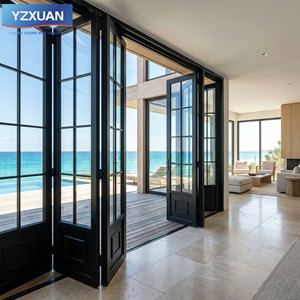
Yes. Every production run is manufactured to project-specific architectural schedules. Opening styles include tilt-and-turn, outward/inward casements, top-hung awnings, lift-and-slide doors, bi-folding assemblies, motorized clerestory vents, and minimal-frame panoramic glass walls. We integrate premium European hardware suites (Siegenia, GU, Roto, Hoppe) or heavy-duty proprietary hardware according to budget and cycle requirements.
What are typical production lead times, and what are the standard payment terms?
Standard production lead time ranges between 25 to 35 business days following final engineering CAD shop drawing sign-off and color swatch confirmation. For specialized configurations requiring custom extrusion dies, fluted decorative glass, or PVDF custom metallic batches, lead times average 35 to 45 business days. Standard export terms are 30% to 50% deposit via T/T with balance payable against Bill of Lading (B/L) copy, or confirmed irrevocable Letters of Credit (L/C) for commercial tenders.
How does the factory assist with field installation and warranty claims overseas?
Every shipment includes labeled components keyed to the approved window schedule, along with comprehensive installation manuals showing perimeter anchorage, weep hole drainage paths, and flashing membrane integration. Our technical engineering desk provides scheduled video support during installation phases. We back our profiles with a 10-year warranty, hardware mechanisms with a 5-year replacement guarantee, and supply complimentary replacement spares (gaskets, rollers, hinges, and lock cylinders) inside every ocean container.
Partner with China's Premier Aluminium Window Exporter
Send your project door and window schedule, architectural CAD elevations, or custom residential bill of quantities. Our engineering team returns full CAD shop drawings and factory-direct pricing within 24 hours.