
Executive White Paper: Engineering Excellence in Aluminium Glass Front Doors
In high-end architectural envelope design, the front entrance represents the critical nexus between aesthetic prestige, operational security, and thermodynamic performance. Sourcing an aluminium glass front door from China is no longer merely a pricing arbitrage exercise; it has evolved into a strategic partnership demanding precision structural tolerance, material science sophistication, and end-to-end supply chain transparency. As urban density increases and climatic extremes become standard design load parameters, commercial builders and luxury residential contractors are demanding entry systems that guarantee zero air leakage, advanced structural resilience, and architectural minimalism.
Modern architectural trends have decisively shifted toward hyper-scale openings, ultra-narrow sightlines, and uninterrupted indoor-outdoor visual transitions. Conventional timber and unreinforced uPVC doors fail to maintain dimensional stability across thermal cycles, leading to sash sagging, draft intrusion, and hardware misalignment. In contrast, 6063-T6 or 6061-T6 structural aluminium alloys, combined with polyamide (PA66 GF25) thermal breaks and multi-chamber composite extrusions, deliver the ideal strength-to-weight ratio required for massive pivot configurations and impact-rated architectural facades.
From the industrial fenestration center of Foshan, Guangdong, our manufacturing plant (Guangdong Dejiyoupin Doors and Windows Co., Ltd. / DERCHI) sets the global benchmark for bespoke architectural portals. By merging CNC profile fabrication, automated European corner crimping, and computerized silicone structural glazing (SSG), we provide global procurement managers with entrance assemblies that exceed North American AAMA, European CE, and Australasian AS2047 specifications.
Material Science: Alloy Selection, Extrusion Profiles & Surface Metallurgy
The structural longevity of any commercial or residential front door begins at the foundry level. Low-tier manufacturers frequently introduce scrap-recycled aluminium alloys that suffer from internal grain porosity, reduced tensile yield strength, and uneven anodic oxidation potential. Our engineering protocol mandates the exclusive use of virgin billet primary aluminium alloys with trace element control:
6063-T6 Structural Profile
Formulated for exceptional architectural extrusion fidelity and superior anodizing quality. Exhibits an ultimate tensile strength of ≥205 MPa and yield strength of ≥160 MPa, delivering optimal stiffness for multi-point locking perimeter jambs.
PA66 GF25 Thermal Barriers
Polyamide extrusions reinforced with 25% longitudinal glass fiber. Matching the thermal expansion coefficient of aluminium (2.3×10¯&sup5;/K), eliminating bimetallic warping and internal delamination under extreme desert or arctic solar differentials.
AAMA 2605 Fluorocarbon Coating
Triple-coat PVDF (fluoropolymer) electrostatic wet spraying cured at 230°C. Delivers 25+ years of resistance against Florida chalking, marine salt spray, and extreme South American coastal UV degradation without surface fading.
Glazing Architecture: Acoustic Attenuation and Thermodynamic Isolation
The glass component within an aluminium front door accounts for 70% to 85% of its total surface area, defining both the aesthetic statement and the thermal envelope envelope boundary. Our fenestration packages employ architectural-grade tempered glass conforming to EN 12150-1 and ANSI Z97.1, configured into high-performance insulated glass units (IGU):
Low-Emissivity (Low-E) Nanocoatings: Sputtered magnetron triple-silver coatings reflect long-wave infrared radiation while preserving high visible light transmission (VLT > 65%). This minimizes solar heat gain coefficients (SHGC ≤ 0.28) in hot tropical regions such as coastal Brazil, Peru, and Southeast Asia, while cutting HVAC chiller loads dramatically.
Acoustic Interlayer Lamination: For luxury urban developments and hotel lobby portals, our sashes integrate asymmetric insulated laminated assemblies (e.g., 8mm Tempered + 12mm Argon Spacer + 6mm Toughened + 0.76mm PVB/Acoustic SGP + 6mm Toughened). This achieves a Sound Transmission Class (STC) rating of 42 to 46 dB, isolating street noise and sub-bass urban acoustic disturbance.
Engineering Specification Matrix: Core Aluminium Door Systems
The matrix below provides procurement directors, façade consultants, and structural engineers with verified performance parameters across DERCHI’s primary commercial and residential door typologies.
| Product Topology | Standard Profile Wall | Thermal Transmittance (U-Value) | Acoustic Damping (STC) | Wind Load Resistance | Primary Application Matrix |
|---|---|---|---|---|---|
| Architectural Pivot Portal | 3.0mm – 4.0mm T6 Alloy | 1.6 – 2.1 W/m²·K | 38 – 42 dB | Class E4500 (AS2047) | Luxury Villa Entrances, Commercial HQ Foyers |
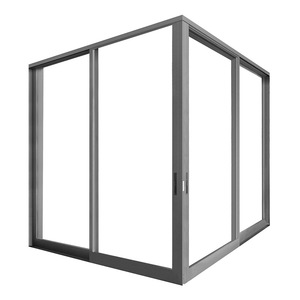
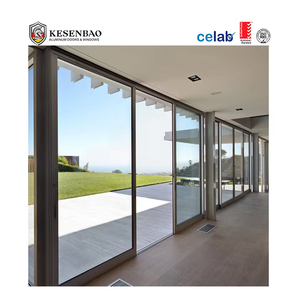
| AS2047 Sliding & Pocket System | 2.0mm – 2.5mm Extrusion | 1.4 – 1.8 W/m²·K | 35 – 40 dB | Class N6 Cyclonic Rating | Coastal Residences, Resorts, Penthouses |
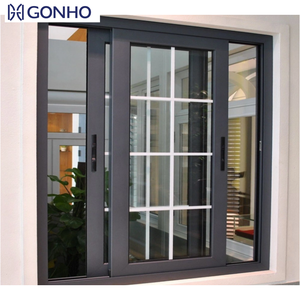
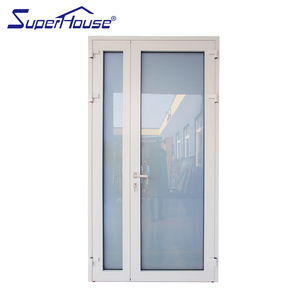
| Heavy Duty Casement / Swing | 2.0mm – 3.0mm Extrusion | 1.2 – 1.6 W/m²·K | 40 – 45 dB | 4000 Pa Serviceability | High-Security Front Doors, Urban Townhomes |
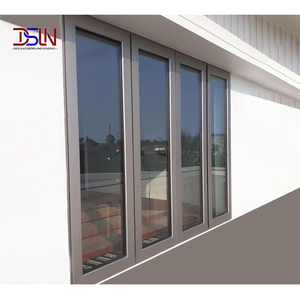
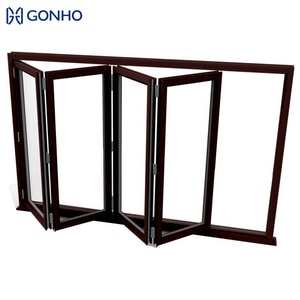
| Panoramic Accordion Folding | 2.0mm – 2.5mm Extrusion | 1.7 – 2.2 W/m²·K | 34 – 38 dB | 3000 Pa Wind Resistance | Hospitality Lounges, Indoor-Outdoor Enclosures |
| Cast Aluminium Hybrid Armored | 8.0mm – 12.0mm Cast Plate | 1.1 – 1.5 W/m²·K | 44 – 48 dB | Ballistic & Forced Entry Level | Diplomatic Estates, Gated Villas, Secure Compounds |
Future Procurement Trends in Aluminium Glass Front Doors (2025–2030)
Global supply chain analysis reveals profound transformations in how commercial builders, multi-family developers, and fenestration importers negotiate contracts with Chinese manufacturers. The procurement criteria have graduated beyond simple FOB component costs into sophisticated total-lifecycle value engineering. The key market vectors driving forward-looking specifications include:
Low-Carbon Aluminium Billets
Driven by the European Union’s Carbon Border Adjustment Mechanism (CBAM) and North American LEED v4.1 frameworks, tier-one developers are insisting on aluminium smelted using hydroelectric or solar energy. Hydro-powered billets limit carbon emissions to ≤4.0 kg CO²/kg Al, offering measurable ESG procurement credits.
Smart Mechatronic Integration
Front doors are converting into active IoT access control nodes. Demand has surged for concealed motorized multipoint locks (e.g., German Siegenia or Italian multipoint locking gears) integrated with architectural touchless 3D biometric sensors, smart building BACnet protocols, and concealed fail-safe magnetic backups.
Pre-Hung Modular Cassettes
Due to surging on-site construction labor costs in Australia, the US, and Western Europe, developers are abandoning site-assembled knock-down frames. Factory pre-hung door systems—complete with laser-aligned subframes, integrated flashings, and factory-tested hardware—reduce installation timelines by 65%.
Mega-Dimension Engineering: The Rise of the Grand Pivot Entrance
Architects worldwide are increasingly specifying oversized pivot front doors exceeding 3.5 meters in height and 2.0 meters in width. Conventional side butt hinges cannot support the continuous torque and sheer stress exerted by an insulated glass sash weighing 350 to 500 kilograms. Engineering these portals requires floor-embedded hydraulic heavy-duty pivot assemblies with adjustable closing and latching speeds, adjustable backcheck dampening, and bottom-rail continuous drop-down neoprene weather seals to guarantee water tightness without relying on a stepped perimeter threshold.
Enterprise Strength: Guangdong Dejiyoupin Doors and Windows (DERCHI)
As an internationally renowned door and window manufacturing titan, DERCHI operates out of a massive 180,000 square meter intelligent production base in Foshan, China. Backed by more than 25 years of relentless research, development, and engineering leadership, our industrial complex integrates high-precision digital profile cutting, German-engineered multi-axis CNC milling centers, cleanroom glass laminating and curing lines, and an autonomous quality assurance laboratory.

Foshan Fenestration Cluster
Positioned at the epicenter of the world's finest aluminium extrusion and hardware manufacturing ecosystem, ensuring rapid supply chain responsiveness and custom extrusion alloy availability.
BIM & Free CAD Drafting
Our dedicated engineering department of 50+ structural technicians delivers complimentary, project-tailored CAD shop drawings, wind load calculations, and Revit BIM models within 24 hours.
Full-Scope Export Packaging
Heavy timber crates reinforced with fumigated solid pine, high-density pearl cotton wrapping, desiccant sachets, and anti-scratch peelable films to survive 60+ days of sea freight and port handling.
Direct Technical Stewardship
Bilingual project management engineers coordinate live across North American, European, and South American time zones to deliver real-time technical consultation and video installation oversight.
Our company portfolio spans thousands of prestigious global installations across North America, South America (Brazil, Chile, Peru, Colombia, Argentina), Australia, the Middle East, and Europe. By maintaining direct institutional compliance with over 100 patents and prestigious international certifications—including ISO9001, CE, AS2047, and UL fire ratings—we guarantee that our doors transition effortlessly through local customs brokers, national building inspectors, and rigorous third-party field testing.

Procurement & Engineering FAQ: Sourcing Architectural Aluminium Doors
Clear, direct, and verifiable technical answers addressing the critical operational and logistical inquiries commonly submitted by international procurement agents, builders, and structural engineers.