180,000㎡
Integrated Production Base
Foshan Extrusion & Assembly Plants
25+ Yrs
Manufacturing Heritage
Deep Fenestration Engineering Experience
100+
Patents & Global Certs
AS2047, NFRC, CE, ISO9001, UL
600+
Engineers & Specialists
CAD Modeling, Structural QC & Export Care
Verified Glazing & Entry Series
Engineered Architectural Casement Doors & Specialized Openings
Precision-manufactured with 6063-T6 virgin billet aluminum alloys, advanced techno-polymer thermal breaks, and multipoint compression locking assemblies. Designed to pass rigorous cyclic wind pressure and forced-entry safety ratings.
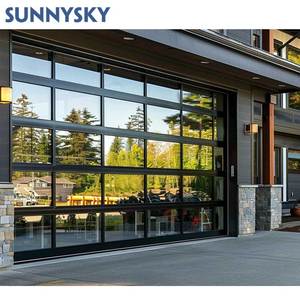
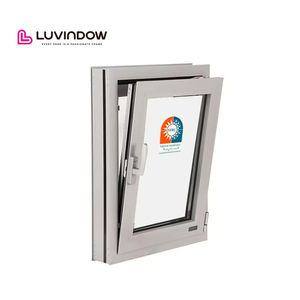
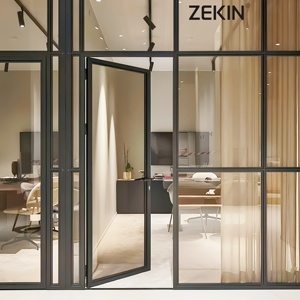
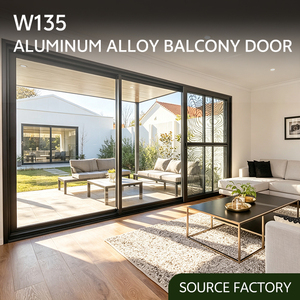
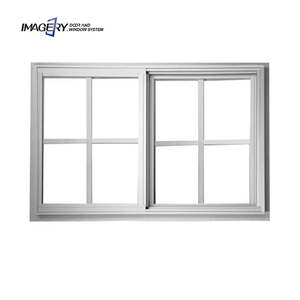
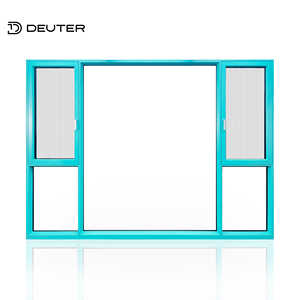
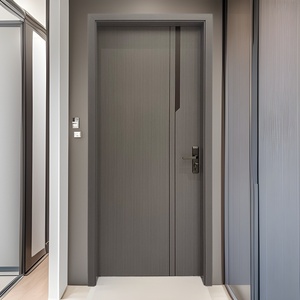
Architectural Performance Standard: Specifying Commercial Aluminum Casement Doors
In contemporary architectural design, the exterior building envelope is tasked with simultaneously fulfilling demanding energy conservation targets, resisting catastrophic weather events, and presenting sleek, minimalist sightlines. As China's premier manufacturer and exporter of commercial-grade aluminum casement systems, Guangdong Dejiyoupin Doors and Windows Co., Ltd. (DERCHI) engineers fenestration systems that bridge structural rigidity with superior thermodynamic optimization.
Casement doors represent the gold standard for sealing integrity among operable door formats. Unlike sliding or multi-slide systems that rely on sliding brush seals prone to friction wear and infiltration gaps, an engineered aluminium casement door operates on an out-swing or in-swing compression axis. When the handle engages the multi-point gear drive, the leaf compresses uniformly against continuous EPDM cellular rubber gaskets on the perimeter jambs and head. This continuous compression creates a pressure-equalized, watertight barrier capable of defying torrential wind-driven rain, severe hurricane velocity pressure, and high acoustic noise pollution.
Thermodynamic Mechanics: Polyamide Thermal Break Engineering
Uninsulated aluminum profiles possess high thermal conductivity (approximately 160 W/m²·K), leading to interior temperature loss, thermal bridging, and problematic interior condensation. DERCHI utilizes precision multi-chamber extrusion profiles equipped with imported PA66 GF25 (25% glass fiber reinforced polyamide) thermal insulation strips. This glass-fiber matrix matches the expansion coefficient of the 6063-T6 aluminum alloy profile, preventing delamination across extreme diurnal temperature fluctuations (-30°C to +85°C).
| Performance Metric | Test Standard | DERCHI Casement Engineering Spec | Architectural Benchmark Significance |
|---|---|---|---|
| Thermal Transmittance (U-Value) | ISO 10077-2 / NFRC 100 | 0.24 - 0.32 BTU/(hr·ft²·°F) [1.3 - 1.8 W/m²·K] | Achieves LEED Gold/Platinum & Passive House standard |
| Structural Wind Load Resistance | ASTM E330 / AS2047 N6 | Serviceability: 3500 Pa / Ultimate: 5500+ Pa | Withstands Category 5 severe hurricane typhoons |
| Air Infiltration Rating | ASTM E283 / EN 12207 Class 4 | < 0.05 cfm/ft² at 1.57 psf (75 Pa) | Minimizes uncontrolled HVAC air exchange and enthalpy loss |
| Water Penetration Resistance | ASTM E331 / EN 12208 Class 9A | Zero water penetration up to 1050 Pa cyclic head | Guarantees zero ingress under driven torrential rainstorms |
| Acoustic Attenuation (STC / OITC) | ASTM E90 / ISO 717-1 | STC 42 - 46 dB (with acoustic laminated IGU) | Airport and heavy highway noise mitigation zones |
| Security & Forced Entry | EN 1627 RC3 / ASTM F588 | Hardened steel mushroom cams & anti-drill strike plates | Resists commercial burglar intrusion attempts over 5 minutes |
Material Chemistry Note: Primary Billet Extrusion vs. Scrap Aluminum
A critical source of failure in cheap door imports is the use of secondary recycled scrap billet containing unrefined impurities. DERCHI strictly enforces 100% virgin 6063-T6 architectural alloy billets with certified magnesium-silicon ratios. This guarantees uniform wall thicknesses (1.8mm to 3.0mm structural webs), uniform anodizing or AkzoNobel/PPG fluorocarbon coating adhesion, and superior metallurgical tensile strength capable of sustaining oversized 3.2-meter single-sash casement doors without sag or deflection.
Hardware Mechanics: Heavy-Duty 3D Adjustable and Concealed Friction Stays
A casement door leaf is subjected to significant cantilever gravitational torque. In high-wind zones, positive and negative suction pressures generate rotational loads that easily shear standard residential hinges. DERCHI integrates structural stainless steel SUS304/SUS316 four-link friction stays or 3D adjustable barrel hinges rated to 250 kg per leaf. Paired with German Siegenia, Hoppe, or Sobinco multipoint perimeter transmission locks, the system draws the entire sash into the rebate at four to eight points simultaneously when latched, maintaining airtight and watertight seals even when subjected to intense buffeting winds.
Market Intelligence
Strategic Procurement Trends in Aluminum Casement Systems (2025–2030)
Global project developers, general contractors, and facade consultants are adjusting their sourcing matrices to prioritize sustainability, climate-resilient engineering, and factory-direct supply chain transparency.
Mandatory Hurricane NOA & AS2047 Certification
Municipal building authorities in coastal North America, the Caribbean, Oceania, and Latin America increasingly enforce rigorous impact certifications. Procurement managers are shifting away from non-certified generic suppliers toward Chinese manufacturers with traceable Florida NOA, Miami-Dade test protocols, and Australian AS2047 third-party test data.
Decarbonization & Low-Carbon Aluminum
With Europe's CBAM (Carbon Border Adjustment Mechanism) and stringent ESG mandates in US corporate commercial development, architects specify low-carbon aluminum smelted with renewable hydro energy. DERCHI's eco-conscious alloy casting processes assist institutional builders in maximizing LEED v4.1 and BREEAM sustainability credits.
BIM Integration & Complete Pre-Glazed Delivery
Escalating on-site labor rates in target export countries (North America, Western Europe, Australia) have catalyzed the demand for fully pre-glazed, unitized casement door assemblies. Forward-looking buyers require factory-installed glass, integrated stainless security mesh, and digital BIM Revit models directly from the manufacturer.
R&D Roadmap
Technological Evolutions Shaping Next-Generation Casement Doors
From vacuum insulating glass (VIG) integration to concealed robotic electro-mechanical actuators, explore how high-tech manufacturing is redefining exterior door performance.
Vacuum Insulated Glass (VIG) Profiles
Replacing heavy triple-pane glazing with 8.3mm ultra-thin vacuum glass allows casement door frames to achieve an extraordinary U-value below 0.60 W/m²·K. This substantially reduces sash weight, preserves hinge cycle lifespans, and eliminates unsightly bulky profile projections.
Smart Home & Concealed Motorization
Modern commercial and high-end residential spaces demand invisible automation. Concealed electric casement actuators are embedded directly within the sash chamber, communicating via Matter, Zigbee, or KNX protocols to integrate with building climate control and smart security hubs.
Fluoropolymer Super-Durable Finishes
To combat intense marine solar radiation and atmospheric salt fog, DERCHI utilizes high-performance AAMA 2605 certified PVDF fluorocarbon coatings and 25-micron anodic oxidations, preventing chalking, fading, or micro-cracking over a guaranteed 30-year exterior lifecycle.
Manufacturing Excellence
Why Global Importers & Contractors Choose Our Foshan Factory
Headquartered in Shishan Town, Nanhai District, Foshan—China's capital of aluminium engineering—Guangdong Dejiyoupin Doors and Windows Co., Ltd. represents the peak of industrial manufacturing scale, structural R&D, and export logistics perfection.
CAPACITY 01
180,000㎡ Mega Facility
Complete vertically integrated production houses automated CNC profile machining centers, robotic corner crimping, continuous multi-stage pre-treatment, and automated testing rigs delivering guaranteed delivery lead-times.
QUALITY 02
Uncompromising Testing Rigor
In-house laboratory conducts four-corner air-tightness, cyclic water leakage tests, and salt-spray chamber trials in accordance with ASTM E330, AS4420, and EN 14351-1 before container crating.
SERVICE 03
Turnkey Architectural Engineering
Our engineering department of 60+ structural draftsmen delivers free CAD shop drawings, wind load deflection calculations, and structural glass engineering stamps tailored to local municipal construction codes.
LOGISTICS 04
Global Marine Export Crating
Customized fumigation-free solid plywood crates, wrapped in protective moisture-barrier films and shock-absorbing EVA rubber corners, ensure ocean transit survival across long routes to the Americas, Europe, and Australasia.
B2B Knowledge Base
Frequently Asked Questions: Casement Door Procurement & Export
Detailed technical answers to common queries raised by international developers, facade engineers, fenestration distributors, and procurement managers.
What are the key technical differences between an aluminum casement door and an aluminum french door?
While both swing on side-mounted hinges, a true architectural casement door utilizes high-performance structural multi-chamber extrusion profiles, heavy-duty 3D barrel hinges or perimeter friction stays, and full-surround compression multi-point locking. A traditional French door configuration typically features a double-leaf format with an active and inactive sash connected via a central flying mullion (astragal). In our factory, both configurations can be engineered with thermal break technology, NFRC energy performance, and Florida Hurricane impact laminations.
How does your factory ensure compliance with North American NFRC and Australian AS2047 codes?
Compliance is designed directly into the extrusions. For North America, our thermal break profiles are simulated using THERM/WINDOW software and independently physical-tested in accredited labs to certify U-factor and SHGC according to NFRC 100/200/500 standards. For the Australian and New Zealand markets, our assemblies pass complete AS2047 testing sequences covering deflection, air infiltration, water penetration resistance, and ultimate structural strength up to the highest N6 design pressure category. Certified test reports are supplied directly for local building council approvals.
What glass specifications do you recommend for hurricane-prone or high-acoustic zones?
For hurricane zones (such as Florida, the Gulf Coast, and the Caribbean), we specify double-glazed impact units consisting of a 6mm or 8mm tempered exterior pane, a 12mm to 16mm argon-filled warm-edge spacer, and an interior laminated glass sandwich comprising 5mm + 1.52mm SentryGlas (SGP) or PVB interlayer + 5mm tempered glass. This sandwich resists large missile projectile impacts (ASTM E1886/E1996 Missiles D and E). For acoustic applications near highways or airports, varying glass sheet thicknesses (e.g., 6mm + 16Ar + 8.76mm acoustic PVB) disrupt sound harmonic frequencies, achieving STC sound transmission ratings over 42 dB.
Can you support custom architectural finishes and dual-color anodizing/powder coatings?
Yes. Because our thermal break casement frames are manufactured by crimping separate exterior and interior aluminum extrusions over the polyamide PA66 GF25 strip, we offer true dual-color finishes. You can specify a weather-resistant AkzoNobel or Tiger fluorocarbon finish (e.g., RAL 7016 Anthracite Grey or RAL 9005 Jet Black) on the exterior facade, while selecting an interior finish that matches the interior decor (such as warm architectural bronze, pristine white, or realistic 3D heat-transfer wood grain textures).
What is the standard production lead time and minimum order quantity (MOQ) for custom project schedules?
Our standard production cycle is 25 to 35 calendar days following client approval of CAD shop drawings and hardware schedule sign-off. For customized villa projects, our MOQ is flexible (we accept customized single-house packages for luxury estates). For commercial high-rise projects, our automated lines can output up to 25,000 square meters of high-grade fenestration assemblies monthly. We quote FOB Chinese main ports (Shenzhen, Guangzhou, Foshan) or CIF/DDP to major world seaports.
How does your export packaging prevent frame warping and glass breakage during ocean shipping?
We follow a rigorous five-tier export packaging protocol. First, frames are taped with peelable protective low-tack blue PVC film. Second, individual corners are armored with impact-resistant shock-absorbing plastic sleeves. Third, assemblies are encased in multi-layer bubble wrap and pearl cotton. Fourth, items are placed upright on heavy-duty steel or ISPM-15 compliant heat-treated wood pallets with diagonal tie-down straps. Fifth, the entire pallet is crated with fully enclosed 12mm plywood cases engineered for forklift handling without physical contact with the glass.
Connect Directly with Our Fenestration Engineering Division
Send your project door schedules, CAD architectural blueprints, or tender specifications. Our senior fenestration engineers will review your thermal, structural, and acoustic criteria and provide shop drawings with an itemized factory-direct quote within 24 hours.