Featured Aluminium Black French Doors Series
Engineered for luxury residential villas, hospitality resorts, and architectural retrofits. Certified to North American, European, and Australian standards.
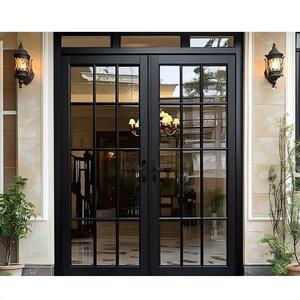
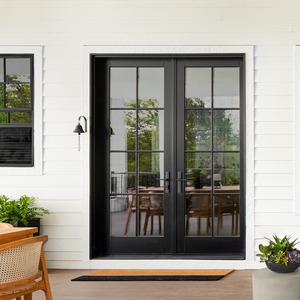
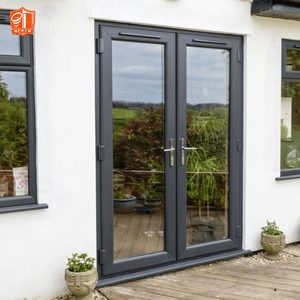
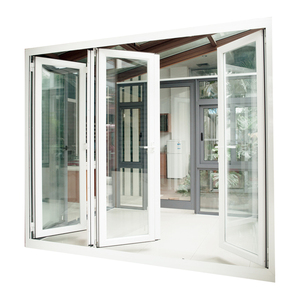
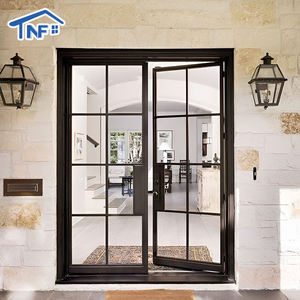
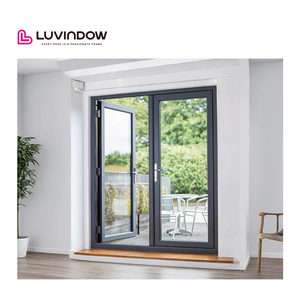
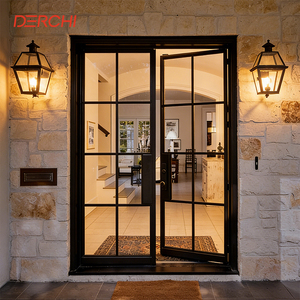
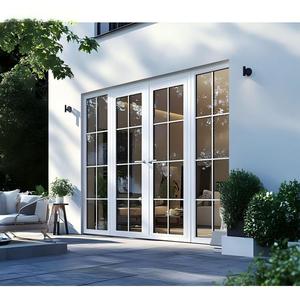
Anatomy of Modern High-Performance Aluminium Black French Doors
Moving past basic fenestration: The structural physics, surface engineering, and climatic resilience that determine commercial durability.
In modern architectural fenestration, the specification of black aluminium French doors has transitioned from a purely stylistic preference to a demanding engineering discipline. While black narrow sightlines evoke the sought-after industrial steel aesthetic popularized by classic European orangeries, replicating this architectural elegance with aluminium alloy requires complex mechanical adaptations. Primary 6063-T5 and 6063-T6 architectural-grade aluminium provides the ideal strength-to-weight ratio to sustain heavy double- and triple-glazed Low-E insulated glass units (IGUs) without racking, sagging, or frame deflection across wide multi-panel spans.
A primary failure mode of lower-tier imported exterior French doors stems from thermal conductivity. Aluminium has an inherently high thermal transfer rate (approximately 160 to 200 W/m·K). Without an engineered thermal break, black powder-coated frames absorb massive solar thermal radiation, transferring surface heat directly into interior conditioned spaces and leading to condensation and seal failure during winter cycles. Modern tier-one manufacturing utilizes continuous polyamide (PA66 GF25) thermal barrier strips reinforced with 25% short glass fibers. This configuration drops whole-window U-factors down to passive-level thresholds (≤ 1.4 W/m²·K), satisfying international energy conservation standards including ASHRAE 90.1, Title 24, and the EU Energy Performance of Buildings Directive.
Surface finishing for black profile systems presents another critical manufacturing variable. Exposure to high solar ultraviolet (UV) indices induces accelerated chalking, fading, and micro-cracking in non-spec coatings. Industrial-grade manufacturing guarantees color retention and corrosion protection by strictly applying Qualicoat Class 2 certified architectural powder coatings, super-durable PVDF (polyvinylidene fluoride) fluorocarbon coatings, or minimum 25-micron hard-anodized black finishes. These methods reliably exceed 3,000 to 5,000 hours in neutral salt spray (ASTM B117) and acetic acid salt spray (AASS) evaluations, making them uniquely qualified for corrosive coastal environments, marine estates, and polluted urban corridors.
Primary Alloy & Extrusion
Utilizing high-purity virgin 6063-T6 aluminium billeting. Multi-chamber cross-sections featuring wall thicknesses from 2.0mm to 3.0mm provide superior torsional rigidity and hinge-load retention for oversized door sashes exceeding 3.2 meters in height.
Isothermal Break Cavities
Engineered with precision-fitted Technoform PA66 GF25 thermal struts. The multi-chamber design isolates external thermal fluctuations, eliminates interior thermal bridging, and accommodates structural dry-glazing EPDM weatherstripping.
Qualicoat Class 2 Finishing
High-polymer electrostatic black powder coating formulations and AAMA 2605 compliant PVDF finishes ensure superior scratch resistance, zero blistering, and chemical protection against coastal sea-salt spray and high atmospheric humidity.
From Foshan Mega-Facility to Global Job Sites
Full-chain production control encompassing architectural profile processing, CNC corner jointing, precision glazing, and overseas export crating.

180,000㎡ Intelligent Facility
High-capacity automated CNC processing lines ensuring micron-level joinery precision, strict extrusion quality control, and timely fulfillment of volume contractor contracts.

Automated Joinery & Assembly
Every corner joint is mechanically crimped and injected with two-part structural epoxy, guaranteeing airtight framing and superior structural integrity against seismic stress.

Ocean Freight Crate Packaging
Fully fumigated solid timber crate packing with desiccants, polyethylene edge buffers, and scratch-resistant protective wrapping designed for long maritime transit without transit damage.
Future Procurement Trends for Aluminium Black French Doors
Anticipating evolving building mandates, smart-home interoperability, and architectural shifts across modern fenestration.
Ultra-Slim Sightline Integration
Architects are driving demand for minimalistic profiles with visible stile widths reduced to under 38mm. Advanced internal reinforcement ribs maintain structural static loads without widening visual perimeter frames.
Vacuum & Aerogel Insulated Glass
The transition toward next-generation Vacuum Insulated Glass (VIG) enables ultra-thin glazing configurations that outperform conventional triple-glazed argon setups in both acoustic damping (Rw 42dB+) and thermal resistance.
Concealed Smart Hardware
Hardware selection is advancing toward motorized multi-point automated locking mechanisms, fully concealed 3D-adjustable hinges, and biometric/RFID interfaces integrated directly into the thermal stile without disrupting clean lines.
Decarbonized Circular Aluminium
Procurement teams increasingly require low-carbon aluminium extrusions manufactured using hydropower-smelted primary ingots with minimum 40% certified post-consumer recycled content, supported by full EPD documentation.
Comparative Performance Analysis: Framing Systems
Quantifiable engineering comparison across core material categories for high-traffic exterior applications.
| Performance Metric | Aluminium Black French Doors (Thermally Broken) | Traditional Wrought Iron / Solid Steel | Solid Hardwood French Doors | Standard uPVC / Vinyl Systems |
|---|---|---|---|---|
| Structural Load Capability | Exceptionally High (Exceeds 4500 Pa Windload) | Extreme (Heavy Deadweight Racking Risk) | Moderate (Susceptible to warping/twisting) | Low to Moderate (Prone to sagging at large spans) |
| Thermal U-Factor (W/m²·K) | 1.2 – 1.6 (Optimized with PA66 Break + Low-E) | 3.5 – 5.8 (Severe Thermal Bridging Risk) | 1.5 – 2.0 (Natural insulator, prone to gaps) | 1.3 – 1.8 (Good insulation, degraded by UV) |
| Corrosion & UV Durability | Virtually Zero Maintenance (Qualicoat Class 2) | High Rust Vulnerability (Requires periodic repainting) | High Maintenance (Rot, swelling, insect risk) | Color fading, embrittlement under intense solar UV |
| Sash Width / Sightline Profile | Ultra-Slim (38mm – 55mm achievable) | Slim (Solid steel bars) | Bulky (85mm – 120mm structural minimum) | Wide & Bulky (68mm – 95mm internal steel core) |
| Acoustic Isolation (STC / Rw) | 38 dB – 45 dB (Laminated / Double IGU) | 28 dB – 35 dB (Typically single glazed) | 32 dB – 38 dB (Dependent on perimeter seals) | 30 dB – 36 dB (Flexible frame profile) |
| Expected Service Life | 40+ Years (Recyclable Alloy Core) | 30+ Years (Dependent on anti-rust maintenance) | 15 – 25 Years (Subject to moisture cycles) | 15 – 20 Years (Polymer degradation) |
Why Global Builders Partner with DERCHI
Full-spectrum factory direct collaboration eliminating distributor markups and mitigating execution risks.
Complimentary CAD/BIM
Complete project-specific shop drawings, connection detail submittals, and 3D architectural models delivered within 48 hours for rapid engineer sign-off.
Multi-Timezone Sales Engineers
Dedicated technical project managers synchronized to North American, European, and Australasian working hours to streamline communication.
Global Code Compliance
Certified verification for CE, ISO9001, AS2047, and UL fire ratings. Complete structural wind-pressure and air/water tightness test reports provided on request.
Turnkey Consolidation
Comprehensive whole-envelope supply combining entrance French doors, interior doors, and architectural garage doors into optimized container loads.
Lifetime Hardware Support
Equipped with industry-standard German hardware (Siegenia, Roto, Hoppe) or specialized DERCHI high-durability mechanisms, backed by readily available spare part inventories.
Frequently Asked Procurement Questions
Addressing technical engineering, logistics, customs clearance, and lead times for global importers.
What profile wall thickness is mandatory for exterior French doors?
How do thermally broken black doors prevent condensation and heat build-up?
Can you provide custom colonial or contemporary astragal bar grids?
What glass options are available for acoustic dampening and impact security?
How are overseas shipments packaged to prevent transit damage?
What is the standard production cycle and sample policy?
Accelerate Your Project with Factory Direct Engineering
Submit your door schedules, project elevation drawings, or bill of quantities. Our technical engineering division will generate full CAD shop drawings and a detailed wholesale quotation within 24 hours.