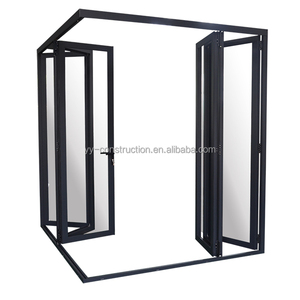
China Best Aluminum Pocket Door Factories & Suppliers

Architectural-grade concealed sliding hardware, polyamide thermal insulation, and bespoke structural glazing systems manufactured directly from Foshan's 180,000㎡ industrial center.

Precision Manufacturing

Featured Aluminum Pocket & Sliding Door Series

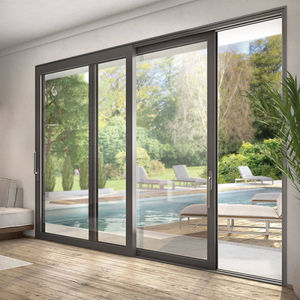
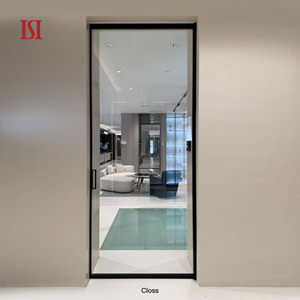
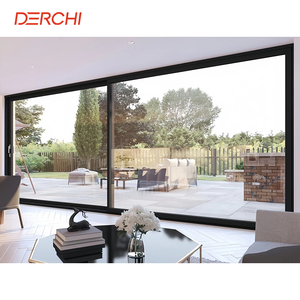
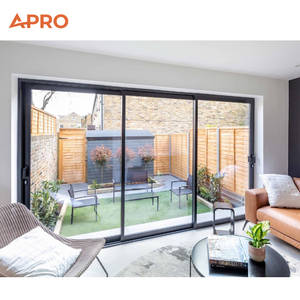
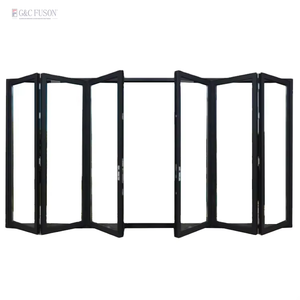
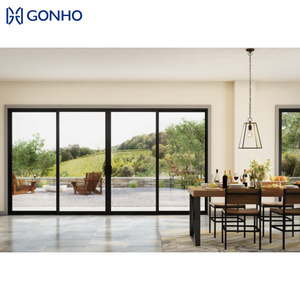
Explore 8 factory-certified configurations engineered for residential villas, coastal estates, and luxury multi-family developments. Every model supports custom sizing, marine powder coatings, and integrated flyscreens.
25+
Years Manufacturing
180,000㎡
Production Base
600+
Skilled Specialists
100+
Patents & Global Certs
Technical White Paper

Anatomy of Modern Aluminum Pocket Door Engineering

Standard sliding doors consume valuable floor space and divide living areas. Modern aluminum pocket door assemblies vanish entirely inside wall cavities, creating seamless indoor-outdoor flows without compromising air tightness, thermal values, or cyclonic wind load resistance.

Polyamide Thermal Barriers

Structural profiles incorporate reinforced PA66 GF25 thermal breaks that decouple exterior temperatures from interior living zones, dramatically reducing condensation and overall U-values.

  • Lowers U-factor down to 1.4 W/m²·K (conforming to NFRC / ASHRAE 90.1).
  • Eliminates thermal bridge warping across large glass spans.
  • Multi-cavity extrusion chambers allow hidden drainage channels.

Concealed Heavy-Duty Rollers

Suspended and floor-supported pocket carriages utilize CNC-machined stainless steel tandem rollers and self-lubricating bearings capable of supporting panels exceeding 450kg.

  • Tested to over 150,000 smooth slide-and-open cycles.
  • Integrated soft-close dampeners avoid wall shock and rebound.
  • Quick-access service caps allow roller height alignment after drywalling.

Cyclonic Acoustic & Weather Gasketing

Concealed wall pockets present inherent wind and water sealing vulnerabilities. We resolve this through magnetic brush fin seals and continuous vulcanized EPDM weatherstrips.

  • Tested against AS2047 N6 cyclonic water penetration limits.
  • Acoustic dampening rating of STC 38dB with laminated double glazing.
  • Self-draining sill trays route moisture to exterior weep conduits.
DERCHI Engineering Center Foshan Manufacturing Base
Precision Material Matrix

Specification Benchmark for Global Procurement

Compare how our direct Foshan manufacturing standards exceed generic commercial export profiles:

Engineering Metric Standard Commercial DERCHI Factory Spec
Aluminum Alloy 6063-T5 (1.4mm) 6063-T6 Architectural (2.0–3.0mm)
Thermal Insulation PVC Strip or Non-Break Polyamide Technoform PA66 GF25
Glazing Unit Single 6mm / Generic DGU 5+12A+5 / 6+16A+6 Low-E Argon Tempered
Roller Hardware Nylon single bearings SUS304 Dual Tandem Anti-Derail Rollers
Surface Finish Basic Powder 40μm AkzoNobel Interpon / Fluorocarbon PVDF ≥65μm
Request CAD Structural Details
Market Intelligence

Future Procurement Trends in Architectural Pocket Doors

As architectural preferences pivot toward zero-threshold indoor-outdoor unification and ultra-clean minimalist sightlines, international buyers face shifting engineering expectations.

1. Invisible Floor Sills (Zero-Step Interlocking)

Architects in North America, Australia, and coastal Latin America are phasing out elevated step-over bottom frames. Future projects demand completely recessed sub-floor drains where the finished interior tile matches the exterior patio level with zero barrier height, integrating invisible drainage slots.

2. Motorized Concealed Automation

Manual sliding of multi-panel 3.5-meter tall pocket doors is becoming obsolete in high-end villa construction. Procurement orders increasingly specify integrated DC brushless belt or magnetic drive motors hidden inside the top cavity header, fully controllable via RS485, KNX, Control4, or smartphone interfaces.

3. High Performance Cavity Framing Kits

Previously, pocket doors required carpenters to build custom stud wall pockets on site, leading to misalignments and sticking doors. Buyers now favor factory-engineered prefabricated aluminum structural cage assemblies that guarantee opening squareness and eliminate wall warping.

DERCHI Enterprise Scale

Guangdong Dejiyoupin Doors and Windows Co., Ltd.

Recognized among the Top 10 premium door and window manufacturing enterprises in China. With over a quarter century of metallurgical mastery and structural glazing expertise, we solve cross-border supply chain risks for contractors, distributors, and architects.

180,000㎡ Production Mega-Base

Equipped with high-precision CNC multi-axis extrusion cutting lines, corner crimping equipment, and automated insulated glass assembly lines in Shishan Town, Nanhai, Foshan.

Certified Testing Rigor

Accredited across CE, ISO9001, AS2047 (Australian N6 level testing), NFRC thermal standards, and UL fire classifications, supported by 100+ appearance and structural utility patents.

Free BIM & CAD Engineering

Our 600+ strong workforce includes dedicated facade engineers who produce complete project shop drawings, cavity pocket jamb details, and load deflection calculations prior to sign-off.

Export Protective Packaging

Every pocket track, profile sash, and glass panel is crated in fumigated fully enclosed plywood packaging with shock-absorbing foam corners, ready for CIF transit to global ports.

Support Desk

Direct Answers for Sourcing Directors

Can't locate your project's specific parameters? Our technical sales engineers respond within 24 hours with certified data sheets.

Send an Inquiry
What are the key technical differences between conventional sliding doors and concealed pocket doors?
Conventional sliding doors stack over a stationary glass panel when opened, restricting the clear walkway opening to 50% or 66% of the overall structural aperture. An aluminum pocket door slides entirely inside an engineered cavity frame concealed within the building envelope, providing 100% unobstructed transit and seamless panoramic integration. Because pocket doors enter an internal wall enclosure, engineering challenges require precise wall perimeter insulation, magnetic air seals, and accessible roller leveling fixtures.
How do you maintain or replace rollers if the door is recessed inside a finished wall?
All DERCHI concealed pocket door systems are engineered with our patented "Maintenance-First" top track architecture. Both top hanging carriages and bottom track wheels are serviced through removable head trims or concealed access cut-outs located at the pocket aperture mouth. You do not need to cut open or damage finished drywall or plasterwork to service, align, or replace roller assemblies during the lifecycle of the building.
Can large-span pocket doors achieve international cyclonic and hurricane wind load standards?
Yes. We engineer heavy-duty exterior pocket systems utilizing structural 6063-T6 aluminum profiles with wall thicknesses ranging from 2.5mm to 3.0mm, complemented by steel or aluminum stiffeners inside the interlocking vertical mullions. Our doors have undergone rigorous air, water, and structural tests meeting AS2047 N6 criteria (Australia) and high-velocity hurricane zone (HVHZ) deflection standards across the United States.
What surface finish treatments ensure longevity in salty coastal or tropical environments?
For projects located in coastal zones (such as Florida, the Caribbean, Brazil, Peru, and Australia), we offer Qualicoat Class 2 certified AkzoNobel powder coatings and 3-coat fluorocarbon PVDF (polyvinylidene fluoride) liquid coatings exceeding 65μm film thickness. These finishes resist salt spray corrosion up to 3,000+ hours in ASTM B117 salt fog testing without chalking, fading, or peeling.
Can I mix pocket doors, pivot entry doors, and windows into a consolidated container?
Yes. One of DERCHI's prime advantages as a single-source Foshan manufacturer is complete project consolidation. We engineer and produce aluminum pocket doors, oversized cast aluminum pivot doors, frameless sliding systems, interior minimalist glass doors, and automatic garage systems within the same 180,000㎡ campus. Consolidating all openings into single 40HQ containers drastically reduces overseas shipping expenses, port clearing costs, and timeline disconnects.
What documentation and shop drawings are delivered before production begins?
Once opening dimensions and architectural plans are submitted, our engineering department drafts comprehensive 2D CAD and 3D cross-sectional shop drawings free of charge. This documentation explicitly confirms rough opening sizes, finished floor recesses, pocket framing depths, glass specification tags, handle hardware backsets, and drainage weep pathways. Cutting only commences after your architect or builder reviews and signs off on the final drawings.

Engineer Your Custom Aluminum Pocket Door Package

Connect with our export engineering department in Foshan, China. Send opening schedules or CAD schematics for a precision factory quote and complimentary structural feasibility audit.