High-Performance Aluminum-Clad Timber Solutions
Engineered for luxury residential estates, passive house structures, and high-exposure commercial facades. Review our eight flagship window and door systems below.
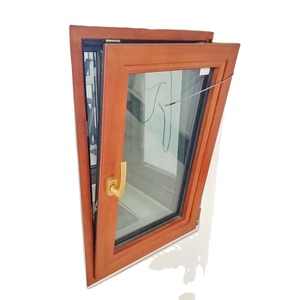
High-Quality Aluminum Wood Al-Wood Composite Window Horizontal Opening
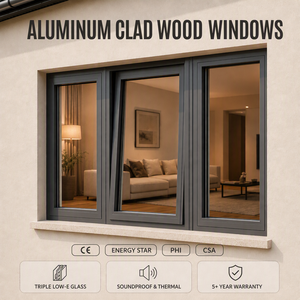
CHAMBROAD Wood Frame Aluminum Clad Tilt & Turn Triple Glazed Window
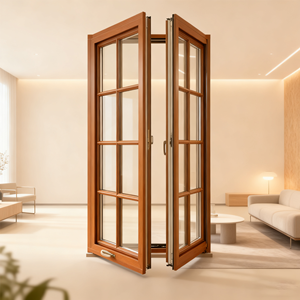
American Style Solid Wood Crank Casement Window for Green Buildings
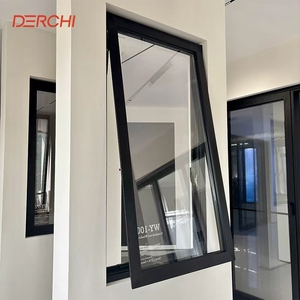
DERCHI AS2047 Certified Australian Style Soundproof Double Glazed Windows
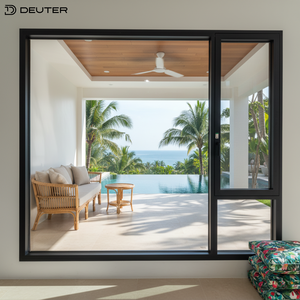
Aluminum Tilt And Turn Window Wood Grain Finish Thermal Break System
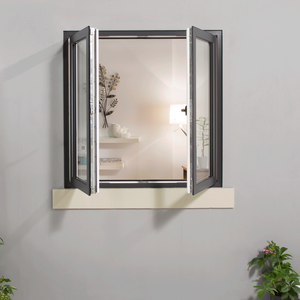
Aluminum Clad Wood Casement Windows with Integrated Mosquito Netting
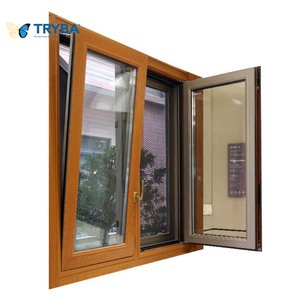
Modern Eco Composite Wood Thermal Break Inward Window with Built-in Louver
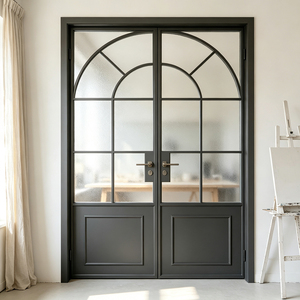
Quiet Magnetic Close Frosted Privacy Glass Aluminum French Casement Door
Guangdong Dejiyoupin Doors & Windows Co., Ltd. (DERCHI)
Operating from our modern 180,000-square-meter intelligent manufacturing center in Shishan Town, Foshan, Guangdong Dejiyoupin Doors and Windows Co., Ltd. (DERCHI) stands among China's Top 10 fenestration enterprises. We combine advanced German multi-axis CNC timber processing lines with automated aluminum extrusion powder coating to deliver world-class aluminum-clad wood windows to architects, general contractors, and trade distributors across North America, Europe, Australia, and South America.
Unlike regional assemblers, DERCHI controls every stage: from vacuum drying and kilning of timber to the accurate equilibrium moisture content (8%–12%), to the independent mechanical isolation of exterior architectural aluminum. We supply verified engineering documentation, parametric BIM models, static wind-load calculations, and custom factory crating that withstands demanding oceanic logistics.
Dedicated Engineering Desk
Over 30 structural engineers reviewing door schedules, elevations, and generating free CAD shop drawings prior to extrusion fabrication.
Climate-Specific Timber Curing
Species-tailored seasoning chambers ensuring North American larch, European oak, or red pine adapt without warping or dimensional creep.
Zero-Stress Floating Clips
Patented nylon composite snap clips allowing natural differential expansion between exterior aluminum and interior solid wood.
Consolidated Freight Handling
Export-grade plywood crating with desiccant protection; direct FOB/CIF quotes to Santos, Callao, Los Angeles, Melbourne, and Hamburg.
Structural Anatomy: Aluminum Clad Wood vs Composite
In high-end architectural fenestration, terminology matters. True aluminum-clad wood (alu-clad wood) features an interior load-bearing frame of multi-laminated solid wood (typically 68mm, 78mm, or 88mm profile depth) shielded on the exterior by an independent aluminum rainscreen. The exterior aluminum does not bear primary structural dead loads; it defends the wood from UV radiation, heavy rain, and chemical atmospheric pollutants.
By contrast, conventional "wood-aluminum composites" often reverse this or use thin decorative timber veneers adhered directly to thermal-break aluminum extrusions. DERCHI's true alu-clad architecture leverages German-engineered snap-on nylon clips, isolating the two materials to eliminate thermal bridge conductivity and absorb the stark difference in thermal expansion coefficients (aluminum expands at ~23×10⁻⁶/K while longitudinal timber expands at roughly 5×10⁻⁶/K).
- Interior Timber: FSC-certified laminated European White Oak or Russian Larch with water-based micro-porous breathable coatings.
- Exterior Cladding: 6063-T6 architectural grade aluminum with AkzoNobel powder coating or PPG fluorocarbon PVDF finishing.
- Thermal Isolation: Dual-component continuous vulcanized EPDM gaskets engineered for airtightness class 4 (EN 12207).
Thermal Performance & Passive House Physics
As green building codes like ASHRAE 90.1, California Title 24, and the European Energy Performance of Buildings Directive (EPBD) raise minimum envelope criteria, fenestration becomes the focal point for envelope heat exchange. Wood is a natural insulator with a thermal conductivity (λ) of approximately 0.13 W/(m·K), compared to structural aluminum at roughly 160 W/(m·K).
When configured with triple-pane insulated glass units (IGU) featuring dual Low-E coatings, 90% argon gas fill, and warm-edge Swisspex spacers, DERCHI aluminum-clad wood systems achieve whole-window U-factors as low as 0.79 W/(m²·K) (equivalent to 0.14 BTU/(h·°F·ft²)), satisfying rigorous Passive House Institute (PHI) criteria.
- Acoustic Damping: The dual-density union of dense wood mass and decoupled aluminum delivers acoustic attenuation from Rw 38 dB to 45 dB.
- Condensation Resistance: High internal surface temperature profile prevents condensation in humid subtropical and sub-zero climates.
- Hardware Integration: Concealed multi-point perimeter gear with mushroom cam heads resisting forced entry up to European RC2/RC3 ratings.
Fenestration Material Performance Matrix
Data-backed engineering comparison for commercial specifiers, estimators, and structural consultants.
| Material System | Whole Window U-Value (W/m²·K) | Acoustic Rating (STC / Rw) | Structural Wind Load Resistance | Expected Service Life | Exterior Maintenance Demand |
|---|---|---|---|---|---|
| DERCHI Alu-Clad Timber (Triple Glazed) | 0.79 – 1.10 | Rw 40 – 46 dB | Class N6 (≥ 4500 Pa) | 50+ Years | Extremely Low (Rainscreen Wash Only) |
| Standard Thermal Break Aluminum | 1.40 – 1.90 | Rw 32 – 36 dB | Class N5 – N6 (4000 Pa) | 30–40 Years | Low (Powder coat check) |
| Solid Unclad Wood Windows | 1.10 – 1.40 | Rw 35 – 39 dB | Class N3 – N4 (2500 Pa) | 20–30 Years (Climate dep.) | High (Repainting/Restaining every 3-5 yrs) |
| Multi-Chamber UPVC / Vinyl | 1.20 – 1.60 | Rw 30 – 34 dB | Class N2 – N3 (1800 Pa) | 15–25 Years (UV prone) | Low (Prone to thermal deformation) |
Emerging Trends Shaping Global Fenestration Sourcing
Market intelligence for commercial developers, luxury villa builders, and building product importers navigating the next half-decade of architectural supply chains.
1. Whole Life-Cycle Decarbonization
Global architectural mandates are pivoting from simple operational energy to Embodied Carbon tracking. Timber acts as an authentic carbon sink, while modern aluminum suppliers are transitioning to recycled low-carbon billet melted with renewable hydropower. Importers who provide certified Environmental Product Declarations (EPD) gain preferred bidding status in LEED and BREEAM-certified developments.
Trend 01: Low Embodied Carbon2. Direct-to-Fabricator BIM Integration
Specifiers no longer rely on static paper catalogs. Modern window sourcing requires parametric Revit/BIM families directly embedded into architectural building models. DERCHI bridges this gap by generating customized shop drawings and BIM-compatible elevations within 48 hours of schedule submission, dramatically compressing pre-construction lead times.
Trend 02: Digital Pre-Construction3. Smart Building & Concealed Automation
High-end residential projects demand seamless smart-home integration. The fastest growing requests involve hidden 24V DC chain-drive actuators concealed within the head of the wooden frame, alongside magnetic Reed contacts compatible with KNX, Zigbee, or Crestron security loops, enabling automated night purge ventilation without sacrificing sightlines.
Trend 03: Invisible Mechatronics4. Multi-Product Container Consolidation
Freight efficiency is paramount. Global distributors and custom home builders are moving away from buying single product lines from fragmented sources. DERCHI provides an integrated solution: shipping custom entry doors, aluminum-clad wood windows, interior flush timber doors, and motorized garage doors consolidated into single 40ft HQ containers, saving thousands in customs clearance and drayage fees.
Trend 04: Supply Chain Consolidation5. Seamless Corner-Welded Aesthetics
Traditional mechanically jointed aluminum frames leave hairline seams at 45-degree miter joints that can collect dirt and corrode over time. The next-generation trend is seamless corner-welded aluminum cladding, post-painted with seamless automotive-grade powder coating, producing perfectly uniform exterior visual frames preferred by minimalist architects.
Trend 05: Seamless Miter Technology6. Extreme Weather Resiliency (Cyclone & Coastal)
Climate volatility is forcing coastal and storm-prone regions to upgrade impact resistance. Next-gen procurement prioritizes laminated SentryGlas (SGP) storm interlayers, marine-grade PVDF 3-coat fluorocarbon exterior finishes, and AS2047 cyclic fatigue certifications capable of withstanding category 5 hurricanes and severe salt fog without degradation.
Trend 06: Resilient EngineeringFrequently Asked Questions by Global Importers & Architects
Direct technical answers addressing risk mitigation, quality control, logistics, and building code compliance.
How does DERCHI prevent wood warping and movement in extreme climates?
Dimensional stability in timber is determined entirely by lumber selection and moisture seasoning. DERCHI utilizes three-layer finger-jointed, radial-cut laminated timber (European White Oak, Russian Larch, or Nordic Pine). Before CNC machining, the wood undergoes controlled kiln drying and equilibrium stabilization to lock moisture content strictly between 8% and 12%. Because grain directions in adjacent laminated layers oppose one another, internal tensile forces cancel out, preventing warping, splitting, or binding across seasonal humidity swings.
How do the windows handle differential expansion between aluminum and wood?
Aluminum and timber expand and contract at drastically different thermal rates. Under intense summer sunlight, an exterior dark bronze aluminum frame can reach 70°C, while the interior air-conditioned wood remains at 22°C. DERCHI solves this by avoiding rigid mechanical fastenings. The aluminum cladding is mounted to the wooden frame using specialized heavy-duty composite nylon sliding clips that provide independent lateral movement without transferring mechanical stress or compromising water barrier integrity.
Are DERCHI products compliant with North American NFRC and Australian AS2047?
Yes. DERCHI products have undergone comprehensive third-party testing in accredited NATA and international laboratories. For Australian projects, our windows achieve AS2047 N6 ratings—the highest structural classification—covering ultimate limit state wind pressure (>4500 Pa), water penetration resistance (>450 Pa), and air infiltration. For North American and European projects, test reports confirm compliance with NFRC thermal standards, CE EN 14351-1, and ISO 9001 quality systems.
What hardware systems are integrated into your aluminum-clad wood windows?
A window's operational lifespan is dictated by its hardware gear. DERCHI partners directly with premier German hardware manufacturers, including Siegenia, Roto Frank, and Hoppe, as well as American Truth crank operators. Our systems feature multi-point perimeter gearboxes, anti-lift mushroom pins, concealed corner hinges supporting sash weights up to 200 kg, and micro-ventilation settings, ensuring smooth, child-safe, and effortless operation over 50,000 continuous cycles.
How are custom orders packaged to prevent damage during ocean transit?
Shipping precision fenestration overseas requires robust packaging protocols. Each window sash and frame is wrapped in anti-static scratch-resistant film, padded with thick closed-cell EPDM corner guards, and sealed in airtight moisture-barrier bags containing industrial silica desiccants. The assemblies are then secured in fumigated, fully enclosed solid plywood crates with integrated base skids, ready for safe forklift handling upon arrival at destination ports.
What is the typical production lead time and quotation workflow?
Once you provide your architectural window schedule or drawings (in PDF, DWG, or Revit formats), our engineering desk generates a line-item quotation and initial CAD shop drawings within 24 to 48 hours. After technical approval and finish sign-off, typical production in our 180,000㎡ plant takes 25 to 35 business days depending on custom wood species and glass processing options. Our export team coordinates FOB China or CIF shipping terms directly to your port of choice.
Partner with China's Premier Fenestration Manufacturer
Elevate your upcoming residential development, commercial facade, or import distribution business. Request our complete architectural product catalog, engineering binder, and competitive factory-direct pricing today.
Get Catalog