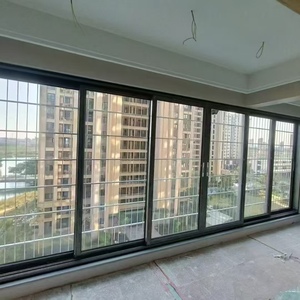
Comprehensive Fenestration Engineering
Featured Architectural Systems & Bi-Fold Complements
Tested for extreme wind loads, severe coastal saltwater exposure, and rigorous thermal efficiency. Direct supply from Guangdong Dejiyoupin Doors and Windows Co., Ltd. (DERCHI).
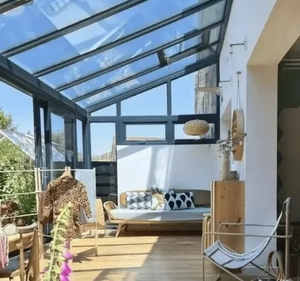
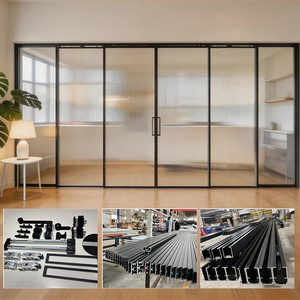
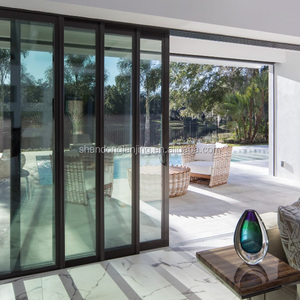
Architectural Anatomy: The Science of High-Performance Aluminium Bi-Fold Systems
Bi-folding door systems (also designated as concertina or folding sliding doors) represent the pinnacle of architectural fenestration complexity. Unlike conventional casements or inline sliders, a bi-fold door functions under concentrated dynamic cantilever loads. Every cycle places tremendous moment stress on top hanging rollers, pivot hinge pins, and continuous bottom guide tracks. Sourcing high-specification systems from China necessitates looking beyond aesthetic superficialities and interrogating profile metallurgy, thermal barrier integration, hardware kinematics, and structural sealing gaskets.
Critical Insight for Project Specifiers: Virgin architectural 6063-T6 primary aluminum extrusions with a minimum profile wall thickness of 2.0mm to 3.0mm are mandatory for heavy-duty panels exceeding 2400mm in height. Recycled secondary billeting compromises tensile strength, causing sashes to sag over time, leading to inter-panel friction, air leakage, and catastrophic lock misalignment under high gust pressures.
6063-T6 Extrusion Metallurgy
DERCHI implements ultra-dense 6063-T6 aluminum alloys yielding tensile strengths exceeding 205 MPa. Profile geometries are engineered with internal reinforcement ribs at critical pivot fastening points to eradicate screw pull-out risks even under violent cyclonic wind loading conditions.
Polyamide PA66 GF25 Barriers
Thermal bridge neutralization is achieved using precision-crimped German Technoform 24mm to 34mm Polyamide (PA66 GF25) thermal break strips. This mechanical barrier isolates indoor and outdoor temperatures, achieving overall assembly U-factors down to 1.4 W/m²K when combined with Low-E argon insulating glass units.
Quad-Roller Kinematics
Equipped with custom-cast Grade 316 stainless steel bogie wheels running along extruded heavy-gauge track inserts. Each four-wheel roller assembly supports up to 150kg per sash, delivering effortless fingertip sliding glide validated beyond 100,000 rigorous opening-closing endurance cycles.
Technical Specification Matrix: Commercial vs. Standard Bi-Fold Engineering
When evaluating manufacturers across China, architectural procurement teams must demand audited laboratory test benchmarks. Below is an engineering comparison matrix showing how DERCHI Foshan Super-Plant export standards compare against conventional local commodity workshops.
| Performance Metrics | DERCHI Architectural Heavy-Duty Series | Standard Domestic Market Bi-Fold | Test Standard Compliance |
|---|---|---|---|
| Aluminium Alloy / Temper | Primary Virgin 6063-T6 (Wall: 2.0mm – 3.0mm) | Secondary Scrap 6063-T5 (Wall: 1.2mm – 1.4mm) | GB/T 5237 / ASTM B221 |
| Thermal Break System | Polyamide PA66 GF25 Thermal Strut (Multi-Chamber) | Poured resin or non-break hollow extrusion | ISO 10077-2 / EN 14024 |
| Acoustic Performance (Rw) | Rw ≥ 40 dB (Soundproofed laminated DGU) | Rw ≤ 28 dB (Standard single/float double) | ISO 717-1 / ASTM E413 |
| Wind Pressure Resistance | Serviceability: 3500 Pa / Ultimate: 5000+ Pa (N6 Level) | Serviceability: 1200 Pa / Ultimate: 1800 Pa | AS 2047 / ASTM E330 |
| Water Penetration Resistance | Static 700 Pa (Weathered Step Track + EPDM) | 150 Pa – 250 Pa (Prone to overflow leaks) | EN 12208 / AAMA 501.1 |
| Hinge & Hardware Rating | Heavy-Duty Grade 304/316 SS (150kg/leaf) | Zinc alloy die-cast components (≤ 60kg/leaf) | EN 13126-15 Cycle Tested |
Global B2B Procurement Trends: Strategic Sourcing Transformation
The international supply chain for bespoke fenestration products is undergoing unprecedented transformation. Global developers, façade engineers, and luxury estate general contractors are altering their purchasing behaviors to adapt to environmental mandates, labor shortages at destination ports, and stringent building energy codes.
Prefabricated Cassette & KD Kits
Escalating on-site labor rates across North America, Australia, and Europe have spurred a massive demand for pre-hung, factory-tested bi-fold systems. Importers require complete KD (Knock-Down) kits with pre-machined lock pockets, factory-fitted gaskets, and pre-routed hinge assemblies that reduce on-site installation labor by over 45%.
Unified Testing & Cross-Border Compliance
Developers are eliminating intermediate distributors, ordering direct from manufacturers holding verified multi-jurisdiction testing: Australian AS2047, European CE EN 14351-1, and American NFRC/AAMA ratings. Third-party mill certificates and traceable raw material origin documentation are now mandatory procurement criteria.
Low-Carbon Aluminium (Circularity)
Decarbonization policies such as the EU Carbon Border Adjustment Mechanism (CBAM) are compelling Tier-1 builders to source bi-fold extrusions produced utilizing renewable hydropower-smelted aluminium billets, dramatically lowering the embodied carbon footprint per square meter of facade area.
Product Development Trends: Pushing Architectural Envelopes
Bi-folding door engineering has advanced far beyond traditional clunky patio frames. Contemporary luxury residential and boutique hospitality designs demand unbroken spatial transitions between interior living rooms and exterior alfresco landscapes.
Ultra-Narrow Sightlines (<110mm)
Traditional bi-fold stile-and-rail assemblies averaged 140mm–160mm in combined meeting profile width. Next-generation systems engineer micro-alloyed extrusion geometry with structural interlocks, condensing the sightline to a minimalist 108mm while supporting extreme vertical glass moments.
Oversized 4.0-Meter Monolithic Panels
Architects are abandoning standard 2.4-meter limitations. Modern high-capacity top hang tracks with dual internal steel carrier sleeves comfortably handle panels up to 4000mm in height and 1200mm in width, accommodating triple-glazed structural laminated IGUs without panel bowing.
Motorized & Concealed Automation
The integration of high-torque brushless DC motors into the head jamb profile allows multi-panel bi-fold systems to be effortlessly stacked or locked into place at the push of a button, synced with smart-home automation protocols, wind sensors, and perimeter security networks.
Enterprise Capability: Why Guangdong Dejiyoupin (DERCHI) Leads China's Industry
Headquartered in Shishan Town, Nanhai District, Foshan City—the undisputed capital of China's aluminum fenestration supply chain—Guangdong Dejiyoupin Doors and Windows Co., Ltd. (DERCHI) represents an industrial titan spanning 180,000 square meters of smart manufacturing infrastructure. With over a quarter-century of technical experience and a dedicated workforce of 600+ personnel, DERCHI bridges the gap between cost-effective Chinese production and elite German-tier fenestration performance.
Precision CNC Extrusion Processing
Our workshop utilizes 5-axis German elumatec machining centers to execute profile miter cuts, corner cleat crimping, hinge screw routing, and water weeping holes with ±0.1mm dimensional precision, ensuring 100% factory squareness prior to crating.
Coastal-Grade Surface Protection
Equipped with vertical fluorocarbon (PVDF) and AkzoNobel powder coating automated lines, DERCHI frames withstand over 3,000 hours of continuous neutral salt spray (NSS) testing, guaranteeing no blistering, chalking, or fading in coastal atmospheres.
Free Engineering CAD Shop Drawings
We eliminate spatial mismatch errors before glass is cut. Our dedicated engineering team prepares comprehensive architectural CAD submittals, anchor calculations, mullion wind deflection analyses, and perimeter flashing details for project sign-off.
B2B Procurement & Technical FAQ: Managing Overseas Sourcing Risks
Direct answers to technical, commercial, and freight logistics inquiries frequently posed by architectural specifiers, curtain wall contractors, and international window distributors.
How do you resolve water leakage risks associated with low/flush bi-fold thresholds? +
Flush floor transitions are architecturally coveted but highly vulnerable to water penetration during wind-driven rain events. DERCHI addresses this through a dual-threshold strategy: For sheltered interior dividers or covered patios, our flush sub-sill system features concealed sub-floor continuous drain trays. For weather-exposed exterior elevations, we recommend our rebated weathered step threshold equipped with continuous twin co-extruded EPDM compression bulbs and directional weeping valves, certified to prevent water ingress up to 700 Pa static pressure.
What glass configurations are engineered to prevent thermal shock and structural deflection? +
Large bi-fold panels undergo intense thermal expansion and wind suction. DERCHI utilizes certified SGCC / CE / AS/NZS 2208 safety glass. Standard high-performance configurations feature 6mm Low-E Tempered + 16A (Argon filled, warm edge spacer) + 6mm Clear Tempered. In typhoon zones or cold climates requiring superior acoustic dampening, we engineer 8mm Tempered + 12A + 6mm+1.52PVB+6mm Laminated assemblies with edge deletion treatments to avoid glass seal failure.
How does DERCHI protect oversized bi-fold door frames and glass during ocean transit? +
Ocean transport exposes freight to extreme moisture, salt air, and dynamic kinetic shocks. All DERCHI bi-fold systems undergo strict pre-shipment dry factory trial-assembly. After passing QA inspection, profiles are wrapped in protective polyethylene tape, cushioned with corner edge guards, and encased in fully sealed, non-fumigation IPPC-certified solid plywood crates with heavy desiccant packs. Crates are loaded with forklift channel skids to ensure zero handling damage during container stuffing and de-stuffing.
Can DERCHI supply complete architectural shop drawings and submittals for local building permits? +
Yes. Our in-house fenestration engineering department produces comprehensive CAD shop drawing packages (plans, elevations, structural jamb details, anchor points, drainage trajectories, and hardware schedules) free of charge upon deposit. In addition, we supply certified test certificates (AS2047, CE, ISO9001, UL) and engineering structural deflection calculations to assist local project engineers with council approvals.
What is the standard production lead time for custom commercial bi-fold orders? +
Standard anodized and RAL powder-coated orders are produced in 25 to 35 calendar days following final CAD drawing approval and glass specification confirmation. Specialized requirements such as non-standard fluorocarbon color-matches, custom woodgrain thermal sublimation, or curved structural glass schedules require 35 to 45 days. We also offer locked container-slot manufacturing reservations for multi-phase commercial construction schedules.
Ready to Engineer Your Architectural Bi-Fold Project?
Direct factory quotations, structural feasibility reviews, and comprehensive product catalog access for commercial builders, architects, and international distributors.
Get Catalog