CE • EN 14351-1
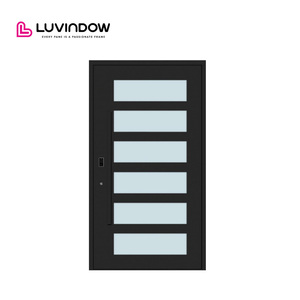
Our precision fabrication facilities deliver comprehensive fenestration assemblies meeting stringent CE certifications, ISO9001 standards, and Australian AS2047 criteria. Explore our signature product series engineered for thermal isolation, extreme wind load resistance, and seamless architectural aesthetics.
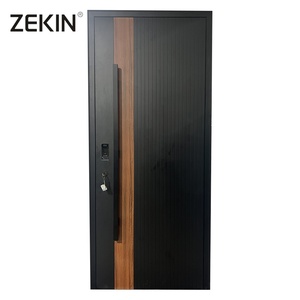
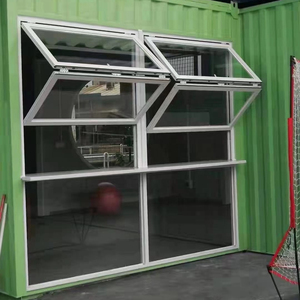
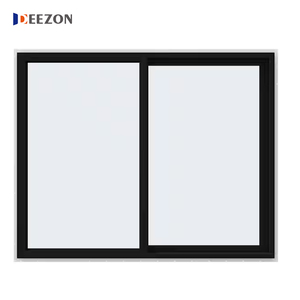
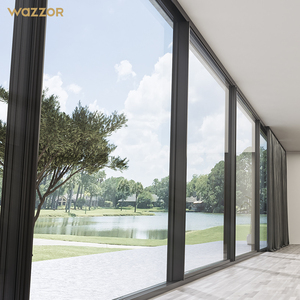
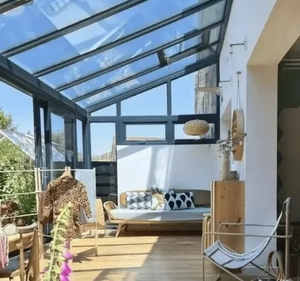
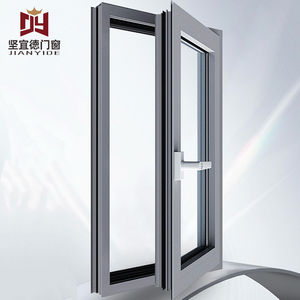
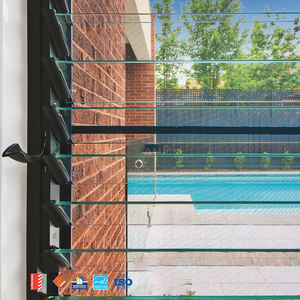
DERCHI (Guangdong Dejiyoupin Doors and Windows Co., Ltd.) combines over 25 years of specialized extrusion fabrication, automated precision milling, and global project engineering. Our direct-from-factory operation guarantees technical oversight from billet casting to crated delivery.
We engineer door and facade systems that strictly conform to CE EN 14351-1 harmonized standards, AS2047 Australian fenestration codes, ISO9001:2015 quality frameworks, and UL10C positive pressure fire tests. We provide authenticated Declaration of Performance (DoP) dossiers for international architectural review.
Our engineering division generates comprehensive AutoCAD shop drawings, structural anchor calculations, and Revit BIM Level 2 (LOD 350) models free of charge. Every architectural jamb, threshold detail, and glass load parameter is verified against your site wind shear and seismic envelope before profile extrusion starts.
Long ocean freight requires rigorous protection against mechanical torsion, humidity, and salt fog. Our crating methodology uses treated fumigated plywood boxes, desiccated moisture-vapor barriers, EPE pearl cotton corner wrapping, and heavy-gauge steel perimeter strapping directly stowed into 20GP/40HQ shipping containers.
The commercial and residential door market is experiencing a profound technological shift driven by stringent decarbonization mandates, evolving building envelope directives, and the integration of mechatronic hardware. Understanding these trajectories is critical for architectural specifiers and bulk procurement officers.
Standard thermal breaks using generic PVC are obsolete under updated European Energy Performance of Buildings Directives (EPBD). The industry has shifted irreversibly toward Technoform PA66GF25 (polyamide reinforced with 25% fiberglass) multi-chamber isolation bars. Cutting-edge assemblies integrate hydrophobic silica aerogel blankets within the thermal cavities, suppressing internal convection currents and achieving thermal transmittance values as low as $U_f \le 1.1\text{ W}/(\text{m}^2\cdot\text{K})$ without excessive frame bulk.
Architects are demanding grand entryways with single door leaves exceeding heights of 4.5 meters and widths of 2.2 meters, with individual panel weights crossing 450 kilograms. To prevent progressive sagging and thermal deflection (the bimetallic bow effect caused by external solar gain paired with interior HVAC air conditioning), modern fabricators employ dual-part anti-distortion thermal isolation strips and aerospace-grade 6061-T6 internal structural sub-chassis.
Mechanical deadbolts are giving way to fully concealed electromagnetic multipoint locking actuators that operate silently within 300 milliseconds. Today's commercial aluminum doors incorporate concealed cable transfer hinges and conductive contact points, enabling frictionless integration with building automation protocols (KNX, BACnet, Zigbee). Biometric capacitive sensors, encrypted Bluetooth modules, and hands-free motorized pivot drives are now integrated into factory-milled extrusions.
Coastal and tropical developments in Latin America, Southeast Asia, and the Middle East expose fenestrations to severe UV radiation and corrosive saline atmospheres (ISO 12944 C5-M marine exposure). Conventional polyester powder coatings deteriorate rapidly under continuous solar irradiance. Procurement standards have migrated toward 3-coat 70% Kynar 500 / Hylar 5000 PVDF fluorocarbon wet spray coatings and Qualicoat Class 3 super-durable thermoset powders that resist chalking and color shifting for over 25 years.
B2B procurement contracts are increasingly scored on embodied carbon metrics. Leading tier-1 suppliers utilize green aluminum billets processed using hydroelectric or solar energy, accompanied by verified third-party Environmental Product Declarations (EPD). Utilizing scrap-segregated recycled alloy streams reduces the primary carbon footprint from 16.7 kg $\text{CO}_2$ per kg of aluminum to less than 4.0 kg $\text{CO}_2/\text{kg}$, qualifying developments for LEED Platinum, BREEAM, and DGNB credits.
Urban density has elevated acoustic decoupling into a core metric. Modern aluminum door fabrication integrates asymmetrical double and triple Insulated Glass Units (IGU) utilizing acoustic Polyvinyl Butyral (PVB) or SentryGlas (SG) interlayers (e.g., 8mm acoustic laminated glass + 16mm Argon spacer + 6mm tempered low-E glass). This configuration suppresses resonance frequencies across the 100 Hz to 3150 Hz spectrum, securing sound transmission class (STC) ratings exceeding 42 dB.
Direct comparative benchmarks between standard architectural grade profiles and our heavy-duty CE certified fabrication assemblies. Use this data sheet for mechanical specification verification.
| Performance Parameter | Commercial Baseline | DERCHI CE Heavy-Duty Series | Applicable Test Standard |
|---|---|---|---|
| Alloy Composition & Temper | Commercial 6063-T5 (1.4 mm wall) | Primary Billet 6063-T6 / 6061-T6 (2.5 – 3.5 mm) | EN 573-3 / EN 755-2 |
| Thermal Barrier Core | Standard PVC / Untreated Strip | Technoform Polyamide PA66GF25 with Aerogel Insulators | EN 14024 (Mechanical Performance) |
| Overall U-Value ($U_w$) | 2.8 – 3.6 W/(m²·K) | 0.9 – 1.3 W/(m²·K) (Passivhaus Capable) | EN ISO 10077-1 / EN ISO 10077-2 |
| Air Permeability | Class 2 (300 Pa) | Class 4 (600 Pa – Zero Infiltration) | EN 12207 / EN 1026 |
| Watertightness Under Pressure | Class 4A (150 Pa) | Class E900 / E1200 (900 – 1200 Pa Dynamic) | EN 12208 / EN 1027 |
| Wind Load Resistance | Class B2 (800 Pa) | Class C5 (≥ 3000 Pa, Ultimate Gust 4500 Pa) | EN 12210 / EN 12211 |
| Acoustic Attenuation ($R_w / C; C_{tr}$) | 28 – 31 dB | 40 – 46 dB (Dual-Seal EPDM Compression) | ISO 717-1 / ISO 10140-2 |
| Surface Coating Durability | Standard Powder Coating (40 μm) | PVDF 3-Coat Fluorocarbon / Qualicoat Class 3 (≥ 80 μm) | AAMA 2605 / ISO 2810 |
Comprehensive, technically authoritative answers addressing certifications, custom fabrication tolerances, structural engineering approvals, containerization, and installation logistics.
Every production batch exported by our factory is backed by an authenticated Declaration of Performance (DoP) and Factory Production Control (FPC) audit documentation issued under EN 14351-1:2006+A2:2016. Our notified laboratory test reports (covering watertightness, air permeability, wind load, and thermal resistance) include verifiable report serial numbers and digital QR credentials directly recognizable by customs authorities, code officials, and structural facade inspectors globally.
Large aluminum doors facing severe solar exposure experience thermal deflection (the “banana effect”) when outer skins heat to 65°C while interior surfaces remain at 22°C. We mitigate this through split-profile thermal isolators featuring sliding polyamide clips that decouple the expansion differentials between exterior and interior profile segments. In addition, internal tensioning rods with adjustable cam bolts are embedded inside the perimeter sash profiles, allowing field recalibration to guarantee continuous smooth latching.
Yes. In our Foshan engineering facilities, we operate an in-house tooling and die division. For commercial facade orders or residential developments requiring proprietary sightlines, specialized thermal chambers, or curved monolithic mullions, we design and wire-cut dedicated H13 steel extrusion dies within 12 to 15 days. Sample pilot extrusions are milled, surface-treated, and shipped via express courier for physical sign-off prior to mass fabrication runs.
We do not use generic off-the-shelf unrated hardware. Our pivot configurations utilize precision floor-spring bearings engineered in partnership with FritsJurgens, Dormakaba, and Siegenia. Assemblies carry rated capacities up to 500 kg (1100 lbs) with tested operating lifecycles exceeding 1,000,000 cycles. Systems feature 360-degree rotation or 90-degree hold-open options, adjustable hydraulic backcheck dampening, and full 3D alignment adjustments post-installation.
Glass breakages result almost exclusively from interior racking and shear vibration during sea voyage. We ship oversized glazed doors in two formats based on installer preference: factory-glazed in steel A-frame cradle racks or unglazed with separate customized marine plywood crates. All glass panes utilize corner perimeter edge protectors, non-staining elastomeric separation pads, and vacuum-sealed desiccant packages to eliminate moisture fogging during ocean transit across tropical equatorial corridors.
Upon approval of final AutoCAD shop drawings and color swatch samples, standard production lead times are 25 to 30 working days for standardized powder coat finishes (e.g., RAL 7016, 9005, 9016). Custom PVDF fluorocarbon coatings, bespoke woodgrain finishes, or custom extrusion dies require an additional 7 to 10 working days. We provide week-by-week photographic and video production milestone reports directly from our CNC machining centers and assembly lines.
Connect directly with our Foshan fenestration engineering division. Submit your door schedules, facade elevations, or CAD drawings for free structural analysis, thermal transmittance simulations, and comprehensive FOB/CIF factory direct quotes.