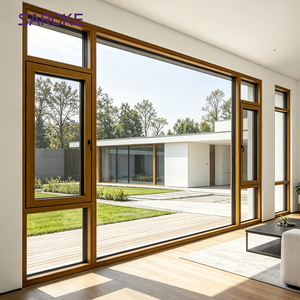
Direct Factory Portfolio
Engineered Aluminum Windows & Architectural Openings
Tested rigorously under European CE standards (EN 14351-1) for wind load resistance, air infiltration, and acoustic containment in demanding residential and commercial developments.
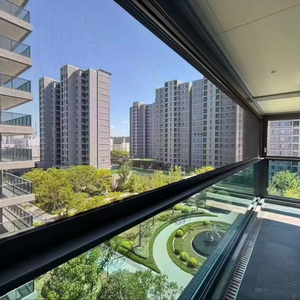
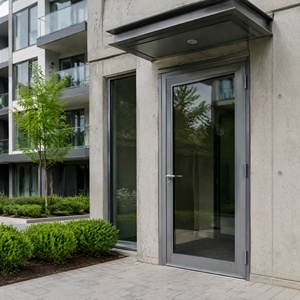
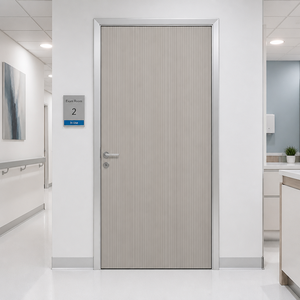
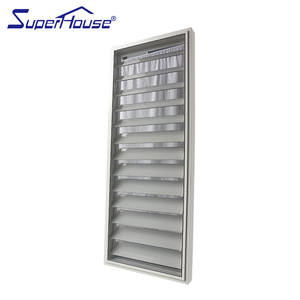
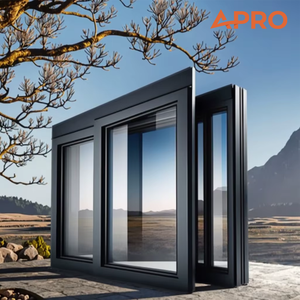
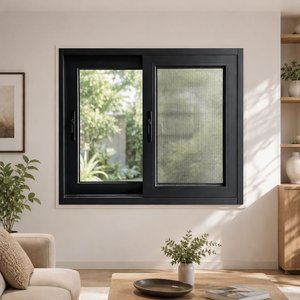
Engineering Authority
CE Conformity Criteria for Architectural Small Windows (EN 14351-1)
A technical overview for facade consultants, specification engineers, and procurement directors sourcing from verified Chinese manufacturing plants.
When sourcing small-format aluminum fenestrations—including bathroom clerestories, utility tilt-and-turn vents, and punch-window modules—specifiers often encounter performance anomalies due to the higher ratio of framing perimeter to glass surface area. Under the European standard EN 14351-1:2006+A2:2016, smaller windows experience magnified thermal edge effects and disproportionate linear wind pressures at anchoring brackets. Meeting structural compliance requires advanced 6063-T6 or 6060-T6 primary aluminum billets treated with electrostatically deposited PVDF or architectural powder coatings exceeding Qualicoat Class 2 criteria.
Thermal Barrier Polyamide Strips (PA66 GF25)
To eliminate thermal conductance, our profiles integrate 24mm to 34mm technoform PA66 GF25 strips reinforced with 25% cross-woven glass fibers. This achieves an assembly U-value (Uw) as low as 1.1 W/(m²·K), exceeding European EPBD energy-efficiency regulations.
Air Permeability & Water Watertightness
Continuous co-extruded EPDM vulcanized sealing gaskets combined with equal-pressure multi-chamber internal drainage enable our small window lines to reach Class 4 Air Permeability (EN 12207) and Class 9A Watertightness (EN 12208) up to 600 Pa test pressure.
Wind Pressure & Mechanical Integrity
Tested for extreme gusts up to Class C5 (EN 12210), corner joints are reinforced with injection-molded corner cleats and anaerobic structural bonding agents to prevent deformation even under intense structural loads and wind turbulence.
Strategic Outlook
Global Fenestration Procurement Trends: 2026–2030
How regulatory shifts, net-zero initiatives, and digital manufacturing influence aluminum window procurement strategies globally.
Decarbonized Circular Aluminum
Leading European and North American developers demand certified low-carbon billet stock sourced from hydroelectric smelting, targeting an embodied carbon ceiling below 4.0 kg CO2e/kg aluminum.
BIM & Parametric Integration
B2B procurement now requires digital twins. Window manufacturers provide LOD 350-400 BIM objects with parametric thermal, acoustic, and mounting data for automated clash detection.
Triple-Glazing & Warm-Edge Spacers
To reduce thermal bridging, small-format windows are transitioning to warm-edge silicone structural foam spacers and argon/krypton filled triple-glazed insulated glass units (IGUs).
Smart Motorization & Actuation
Integrated micro-linear actuators embedded into frame profiles allow automated ventilation connected directly to Building Automation Systems (BAS) and environmental sensors.
Guangdong Dejiyoupin (DERCHI) Heritage
World-Class Manufacturing Capacity from Foshan to the Globe
Operating out of our 180,000㎡ industrial headquarters in Foshan, China, Guangdong Dejiyoupin Doors and Windows Co., Ltd. (DERCHI) represents the pinnacle of fenestration engineering. Recognized as an industry leader for over 25 years, our comprehensive campus unites profile extrusion, precision CNC machining, automated glass processing, and multi-stage quality control.
- Complete Structural Validation: In-house air, water, and wind test chambers providing data benchmarked against EN, AS 2047, and ASTM standards.
- End-to-End Customization: In-house engineering providing complimentary CAD shop drawings, glass schedules, and structural calculations prior to production.
- Consolidated Container Shipping: Ability to consolidate custom small windows, main entrance pivot doors, and architectural curtain walls within heavy-duty export crates to optimize logistics.

Technical Knowledge Base
Frequently Asked Questions on CE Certified Small Windows
Essential guidance for commercial contractors, facade estimators, and architectural partners.
What specific documentation proves a window manufacturer has authentic CE Certification under EN 14351-1? ▼
Authentic CE compliance requires three primary components: an Initial Type Testing (ITT) report issued by an accredited European Notified Body (NB), a continuous Factory Production Control (FPC) audit system conforming to ISO 9001, and a formal Declaration of Performance (DoP) published by the manufacturer detailing specific numerical ratings for wind load resistance, air permeability, water tightness, acoustic ratings, and thermal transmittance.
Why do small aluminum windows require customized thermal break engineering compared to standard sizes? ▼
Small windows have a high frame-to-glass ratio (often 35-50% frame surface area compared to 15-20% on large facade lites). Consequently, profile heat loss dominates overall window performance. Sourcing small windows with inadequate thermal barrier insulation causes overall assembly Uw to rise sharply, resulting in interior edge condensation and failure of localized building energy codes.
How does DERCHI ensure sea-freight durability and corrosion protection during ocean transit? ▼
Every window undergoes multi-layer protective packaging: surface protective films on all powder-coated profiles, corner edge buffers, moisture-absorbing desiccant packs, closed-cell polyethylene foam wraps, and fumigated solid timber or OSB crates. Surface finishes are formulated to withstand marine salt-spray fog testing exceeding 1,000 hours under ASTM B117 standards.
What is the standard manufacturing lead time for custom OEM/ODM small window specifications? ▼
Standard architectural lead time spans 20 to 30 working days from finalized shop drawing approval. For custom profile extrusions requiring dedicated aluminum extrusion dies, an additional 10 to 14 days is allocated for tooling fabrication, sample verification, and laboratory testing.
Can multiple window types and door assemblies be mixed into a single consolidated ocean container? ▼
Yes. Our Foshan factory handles project-based batch consolidation. Clients frequently combine customized small clerestory windows, residential casement systems, panoramic sliding windows, and front entrance pivot doors into uniform 20GP or 40HQ container shipments, significantly minimizing per-unit freight and handling tariffs.