Engineered Aluminium Net Doors & High-Performance Glazing
Explore our export-certified portfolio, meticulously built for cyclone resistance, thermal efficiency, insect exclusion, and impenetrable structural perimeter security.
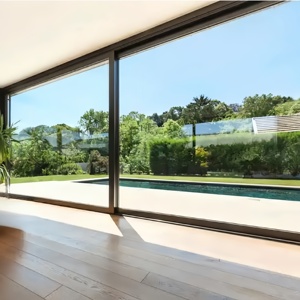
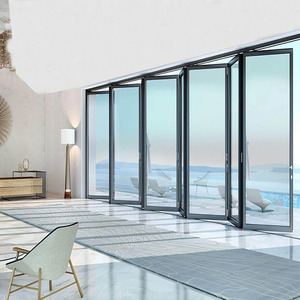
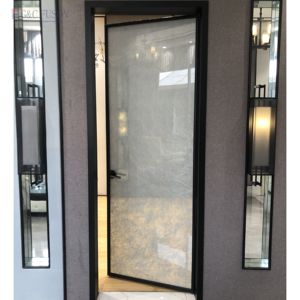
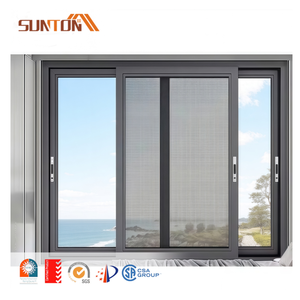
Technical Deep-Dive: Specifying CE Certified Aluminium Net Door Systems
Modern fenestration systems require seamless coordination between primary thermal barriers, aerodynamic wind-load performance, and mechanical mesh retention. An aluminium net door is no longer merely an insect protection screen; it is an integrated structural envelope assembly offering security against forced entry, compliance with acoustic attenuation standards, and climate-responsive solar shading.
Under European Standard EN 14351-1:2006+A2:2016, windows and external pedestrian doorsets must satisfy rigorous performance thresholds regarding mechanical strength, water tightness, air permeability, and acoustic insulation. When evaluating manufacturers and tier-one suppliers, civil engineers and facade consultants demand proof of strict alloy composition (typically 6063-T5 or 6063-T6 architectural grade) alongside high-tensile 304/316 marine-grade stainless steel woven wire mesh with specialized electro-deposition surface coatings.
| Performance Characteristic | Test Methodology & Standard | Standard Market Specification | DERCHI Heavy-Duty Industrial Standard |
|---|---|---|---|
| Mechanical Security / Impact | EN 1627 / AS 5039 / AS 5041 | Dynamic impact resistance < 50 Joules | RC2 / RC3 Compliance; > 100J Dynamic Shear |
| Alloy Tensile Strength | ASTM B221 / EN 755-2 | Tensile Rm ≥ 160 MPa | 6063-T6 Extrusions (Rm ≥ 215 MPa; Rp0.2 ≥ 160) |
| Mesh Retention Engineering | Australian Knife Shear / Probe Test | Adhesive bead or vinyl spline press | Mechanical Wedge Interlock System (Zero Pull-Out) |
| Corrosion Resistance (C5 Marine) | ISO 9227 (Neutral Salt Spray) | 480 Hours ASTM B117 | > 3,000 Hours AkzoNobel Fluorocarbon / Interpon D |
| Air Permeability / Wind Load | EN 1026 / EN 12211 / AS 2047 | Class 2 (300 Pa) / Class B2 | Class 4 (600 Pa) / Class C5 (Extreme Typhoon Class) |
The core structural advantage of our CE-certified aluminium net door assemblies is the proprietary mechanical clamping frame. Unlike low-cost alternatives relying on rubber splines or chemical gluing that inevitably fail under thermal cycles and UV radiation, our frames utilize an internal mechanical anchoring wedge. This converts impact energy directly into mechanical resistance along the entire perimeter profile.
Why Architectural Specifiers Rely on DERCHI
Leveraging over two decades of technical mastery, our integrated manufacturing ecosystem bridges the gap between complex architectural concepts and precision fabrication.
Verified CE & Global Compliance
Our complete manufacturing pipeline maintains compliance with ISO9001, CE EN 14351-1, Australian AS 2047, and UL fire ratings. All mechanical shear, water tightness, and structural deflection datasets are fully verifiable for rapid municipal engineering sign-off.
180,000㎡ Intelligent Base
Operating one of the industry's most advanced fabrication centers in Shishan Town, Foshan, DERCHI integrates automated CNC extrusion machining, precision corner-crimping, multi-layer fluorocarbon spray lines, and dedicated clean-room IG/mesh assembly stations.
Free Custom CAD Shop Drawings
Our dedicated engineering team translates architectural schematics into millimeter-accurate shop drawings, sectional profiles, and thermal calculations. We ensure zero error tolerance before raw profile extrusion or glass processing commences.
Extreme Climate Adaptability
Whether facing high-salinity coastal fronts across South America, arid UV environments, or hurricane zones, our architectural anodizing and AkzoNobel marine powder-coat finishes prevent blistering, pitting, and frame degradation over decades.
One-Stop Consolidated Logistics
Consolidate your entire building envelope requirements—including high-security entry pivot doors, net screens, bi-folding patio units, and garage doors—into unified, export-grade reinforced wooden crating, reducing shipping overheads significantly.
Synchronized Project Support
International clients work directly with veteran sales engineers aligned with Western and South American operational time zones. From virtual 3D VR factory audits to on-site video assembly instruction, our support lifecycle remains constant.
Future Sourcing & Engineering Trends in Net Door Fenestration
Analyze the evolving market dynamics and architectural shifts directing high-performance aluminium door procurement over the next decade.
Minimalist Sightlines
Transition from bulky frames to ultra-narrow interlocks (< 20mm), maximizing indoor-outdoor transition and natural illumination without sacrificing EN 1627 anti-intrusion ratings.
Multi-Barrier Integration
Procurement teams increasingly specify dual-action frames that house thermal-break double glazing alongside retractable or fixed 316 stainless micro-mesh in a single modular jamb.
Smart Biometric Access
Rapid adoption of hidden multi-point electronic locking systems, biometric fingerprint handles, and automated motorized sliding tracks integrated directly into building automation (BMS).
Circular Eco-Standards
Stricter carbon border adjustment compliance (CBAM) requiring aluminium profiles extruded using low-carbon renewable energy and recycled aluminium billets, verified by ISO 14025 EPD declarations.
Frequently Asked Questions by Specifiers & Importers
Direct technical answers addressing critical parameters regarding sizing, compliance verification, and ocean container logistics.
Q1: How does CE certification impact the import of aluminium net doors into global markets?
The CE marking under EN 14351-1 serves as definitive confirmation that the doorsets meet mandatory European Union harmonized standards for mechanical resistance, air infiltration, wind load safety, and dangerous substance exclusion. International building inspection authorities outside Europe (including South America, the Middle East, and Southeast Asia) routinely recognize CE certification test documentation as equivalent or superior proof of structural integrity.
Q2: What differentiates high-tensile 316 marine-grade mesh from standard insect screens?
Standard screening is primarily manufactured from woven fiberglass or lightweight 0.2mm aluminium wire, intended solely for insect exclusion. In contrast, DERCHI architectural security net doors employ 0.8mm to 1.0mm diameter 316 marine-grade austenitic stainless steel wire with a tensile strength exceeding 900 MPa. This construction withstands severe knife slashing, blunt impacts, crowbar attacks, and long-term coastal salt mist exposure.
Q3: Can custom architectural openings and oversized heights be manufactured?
Yes. Every door assembly is engineered to order based on structural calculations. DERCHI routinely fabricates single-panel sliding or hinged security net configurations exceeding 3,200mm in height and 2,000mm in width, incorporating heavy-duty structural corner keys, European hardware, and reinforced pivot pins to eliminate panel sag over extended duty cycles.
Q4: How are doors packaged to prevent surface scratches and distortion during transoceanic shipping?
Our export packing protocol involves a four-tier protection strategy: protective surface film, shock-absorbing corner sleeves, full pearl-cotton wrapping, and sealed fumigated plywood crates with reinforced steel banding. Hardware packages and sliding tracks are separately labeled to match the project door schedule, facilitating seamless on-site unloading and distribution.
Q5: What architectural information is required to receive an accurate CAD drawing and project estimate?
To provide an exact proposal within 24 hours, our engineering department requires structural wall opening dimensions (width x height), preferred configuration (sliding, bi-fold, hinged, or pocket), finish specification (RAL code, powder coating, or anodized), glass configuration (if combined with thermal break IGUs), and any specific wind-load or fire requirements.
Q6: Does DERCHI supply full container load (FCL) mixed building envelope consolidation?
Absolutely. Tier-one builders and developers regularly leverage our 180,000㎡ industrial footprint to consolidate aluminium net doors, cast aluminium luxury pivot doors, architectural curtain walls, tilt-and-turn windows, and automatic garage systems into shared shipping containers, drastically cutting customs clearance fees and ocean freight per unit.