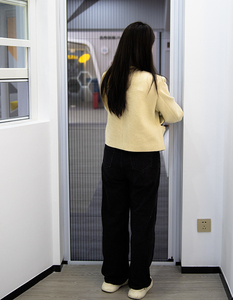
Factory Showcase
Precision-Engineered Mosquito Net Door Systems
Tested under rigorous European CE Standards (EN 13561) for mechanical durability, wind resistance, corrosion endurance, and high-traffic performance across residential and commercial hospitality envelopes.
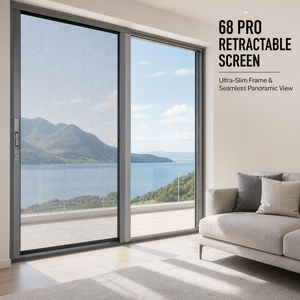
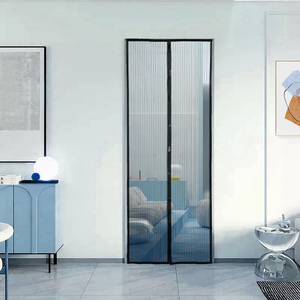
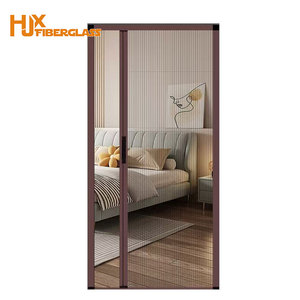
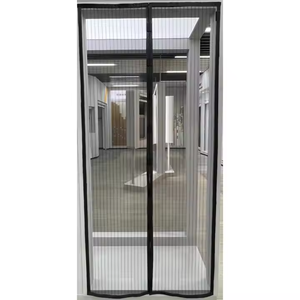
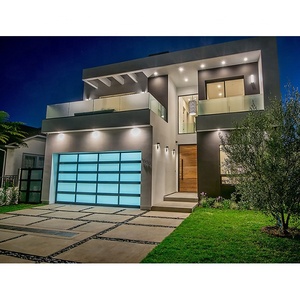
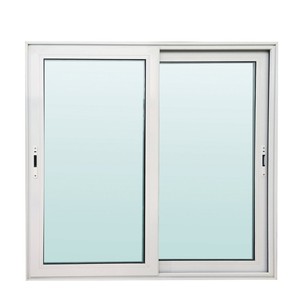
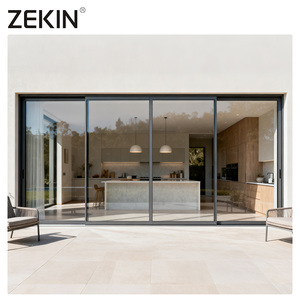
180,000㎡
Smart Production Base
25+
Years Industry Experience
100+
Patents & Global Certs
600+
Skilled Specialists
Procurement Whitepaper
Engineering Specifications for CE-Certified Aluminium Mosquito Net Doors
Navigating global building regulations, structural alloy grades, and micro-mesh mechanics for commercial and residential developments.
In contemporary fenestration architecture, insect exclusion systems have evolved from passive, secondary accessories into integrated structural sub-systems. For international real estate developers, commercial contractors, and facade consultants, procuring CE Certified aluminium mosquito net door factories requires an in-depth understanding of material science, operating kinematics, wind load resistance, and corrosion-prevention technologies. A failure in screening integration leads not only to occupant discomfort through compromised air exchanges, but also induces long-term warranty friction caused by thermal profile warping, mesh unraveling, and track binding under adverse meteorological conditions.
Key Engineering Finding: Under European standard EN 13561 (External Blinds and Screens - Performance Requirements), insect screen assemblies must demonstrate structural stability under sustained wind pressure up to Class 3 ratings while maintaining dimensional tolerance across extreme temperature fluctuations (-30°C to +80°C). Factory-level conformity requires documented tensile alloy verification, automated anodizing thickness inspection, and systematic cycle testing up to 50,000 continuous operating strokes.
1. Metallurgical Formulation: 6063-T5 vs. 6060 Primary Extrusion
A primary failure point in non-certified mosquito net doors originates in the structural extrusion. Tier-1 certified factories utilize primary aluminium billets alloyed to ASTM 6063-T5 or 6060-T6 standards. The chemical composition is strictly regulated with silicon (0.2–0.6%) and magnesium (0.45–0.9%) to achieve a tensile strength not less than 215 MPa and yield strength exceeding 170 MPa. In contrast, uncertified sub-tier workshops frequently introduce post-industrial secondary scrap aluminum, which drastically elevates impurity thresholds (primarily iron content), resulting in brittle extrusion walls, microscopic pitting during powder coating, and eventual catastrophic fatigue along mitered corners during high-wind cyclonic events.
2. Mesh Matrix Performance: Fiberglass, High-Density Polyester, and Stainless Steel (AISI 304/316)
The mesh fabric dictates airflow coefficient, light transmission, puncture resistance, and pest exclusion granularity. Specifiers must align mesh material matrix with specific environmental stressors:
PVC-Coated Fiberglass
Density: 18x16 mesh per inch².
Applications: Residential & standard hotel balconies.
Properties: Dimensionally stable under thermal stress, non-combustible yarn core, superior light transmittance (>72%), UV-stabilized against chalking.
Pleated PP / Polyester
Structure: Accordion fold geometry.
Applications: Barrier-free retractable doorways.
Properties: High memory retention, hydrophilic hydrophobic dual treatment, ideal for multi-slide and oversized patio doors with zero-threshold clearances.
Marine Stainless Steel (316)
Wire Diameter: 0.8mm woven.
Applications: Coastal & high-security villas.
Properties: Resists salt spray corrosion exceeding 1,000 hours ASTM B117 testing, anti-cut knife shear resistance (AS 5041), combines insect blocking with security deterrent.
3. Future Procurement Trends in Commercial Insect Screen Systems
The global procurement market for architectural insect screens is shifting toward smart, integrated, and bioclimatic building components. Procurement professionals should align their sourcing criteria with the following emerging industry developments:
A. Low-Profile Barrier-Free Track Engineering: Traditional raised bottom tracks (15mm–25mm) create trip hazards and fail universal access guidelines (such as ADA or European Barrier-Free Standard DIN 18040). Leading factories have developed tracked retractable systems utilizing caterpillar chain links that glide on a 3mm recessed or surface-adhered ultra-flat PVC/stainless guide strip, providing smooth wheelchair and trolley passage.
B. Anti-Pollen & PM2.5 Electrostatic Filtration: Next-generation mosquito screening integrates electrostatically spun nanofiber matrices capable of arresting not only mosquitoes (Culex and Aedes) and midges, but also filtering out up to 88% of airborne pollen and ambient PM10 particulate matter, transforming standard fenestration into passive air sanitization barriers.
C. Motorized Smart Home Integration (Matter & Zigbee Automation): Demand for automated zip-screen mosquito blinds with intelligent obstacle detection has grown exponentially. Concealed tubular motors operating under 35dB, synchronized via building management systems (BMS) with wind/rain weather stations, are rapidly replacing manual pull screens across luxury commercial resorts and high-end residential towers.
Manufacturing Capabilities
Why Global Sourcing Partners Select Our Manufacturing Base
Direct from Guangdong Dejiyoupin Doors and Windows Co., Ltd. (DERCHI) — Foshan’s Benchmark Industrial Facility.
Comprehensive System Engineering from Raw Profile to Finished Unit
With an expansive 180,000㎡ modernized industrial plant and over 25 years of specialized fenestration expertise, our manufacturing center represents the pinnacle of Chinese precision doors and windows manufacturing. Recognized among the national Top 10 brands, we offer institutional-grade supply stability for international distributors, general contractors, and facade engineers.
- Verified CE & ISO Quality Control: Full compliance with CE, ISO9001, AS2047, and UL fire ratings with complete traceability across profile extrusion, anodizing, powder coating, and automated assembly.
- Over 30 Proprietary Patents: Patented hidden caterpillar-track guide systems, dampening spring retractor cartridges, and dual-latch security mesh systems.
- Complimentary CAD & BIM Drafting Support: Direct collaboration with your engineering desk to output custom shop drawings, wind load calculations, and extrusion miter schedules.
- Export-Standard Protective Packaging: Multi-layer protective foam, corner-capping, honeycomb stabilization, and fumigated timber crating to guarantee zero-defect long-haul maritime transport.

Technical Help Desk
Frequently Asked Questions on Aluminium Mosquito Door Procurement
Comprehensive engineering clarifications addressing durability, international shipping, sizing tolerances, and certification compliance.
What specific testing proves CE certification compliance for your mosquito net doors?
Our mosquito net door and window assemblies are certified according to European Standard EN 13561. This standard governs external blinds and performance requirements including resistance to wind loads, operating force resistance over repetitive mechanical cycles (tested up to 50,000 cycles for our 68 PRO and retractable lines), and corrosion testing via neutral salt spray (NSS) protocols in accordance with ISO 9227. All compliance test sheets, factory audit reports, and Declarations of Performance (DoP) are available upon request for municipal building code approvals.
How does 6063-T5 virgin aluminium alloy compare with recycled aluminium in coastal climates?
Virgin 6063-T5 architectural aluminium alloy exhibits precise metallurgical control, maintaining low trace iron contaminants (below 0.35%). This ensures uniform electro-deposition during anodizing (minimum 15–20 microns) or architectural fluorocarbon/powder coating (Qualicoat Class 2 compliance). Recycled scrap aluminium contains irregular metallic inclusions that trigger galvanic micro-corrosion when exposed to airborne saline moisture in coastal zones like Brazil, Chile, the Caribbean, or Southern Europe, leading to blistering, finish peel, and eventual structural degradation within 24 to 36 months.
Can your factory supply custom-sized openings and barrier-free threshold solutions?
Yes. Every architectural schedule is engineered to exact rough opening measurements. Our technical team produces full CAD shop drawings for verification prior to extrusion cutting. For oversized patio apertures up to 6.0 meters in width and 3.2 meters in height, we manufacture multi-panel telescoping retractable screens and pleated mesh setups featuring low-profile, barrier-free floor guides (3mm height) fully compatible with international universal accessibility guidelines.
What is the standard production lead time and minimum order quantity (MOQ)?
For standard profile colors (e.g., Anthracite Grey RAL 7016, Matte Black RAL 9005, Traffic White RAL 9016) and standard fiberglass mesh, manufacturing lead time is typically 15 to 25 days following shop drawing approval. Customized RAL powder coating, woodgrain sublimation finishes, or specialized 316 stainless security mesh generally requires 25 to 35 days. We support flexible MOQs starting from sample batches for prototype project verification up to full 20GP/40HQ container consolidations.
How are delicate screen assemblies packed to avoid damage during ocean transport?
Damage prevention in trans-oceanic freight relies on a rigorous 4-layer packaging sequence: First, high-density non-abrasive protective polyethylene film wraps every profile face; second, reinforced corner protectors safeguard all 45° and 90° miter joints; third, units are encased in multi-wall shock-absorbing corrugated cardboard boxes; finally, all packages are consolidated in custom-built fumigated solid plywood crates with integrated base skids for mechanical forklift handling.
Can we consolidate entry doors, garage systems, and insect screens into one container?
Yes, this is one of our key competitive advantages as a 180,000㎡ comprehensive manufacturing facility. International clients frequently consolidate custom aluminum entry doors, heavy-duty cast aluminum security gates, glass garage doors, and modular mosquito screen doors into a single shipping container. This one-stop consolidation significantly reduces overall sea freight costs, streamlines customs brokerage fees, and ensures unified hardware finishes across the building development.
Plan Your Certified Fenestration Procurement
Contact our engineering desk today for comprehensive product specifications, CE testing documentation, or tailored CAD shop drawings for your upcoming development project.