Engineered Anthracite Aluminium Windows Systems
Precision-engineered in our 180,000ã„¡ manufacturing complex. Compliant with European harmonized norms (EN 14351-1), AS2047, and North American ASTM structural requirements.
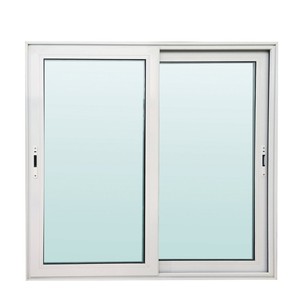 Sliding System
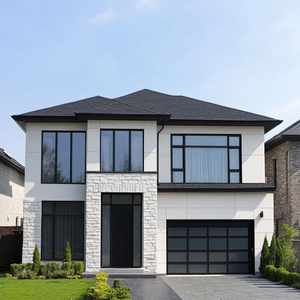 Impact Rated
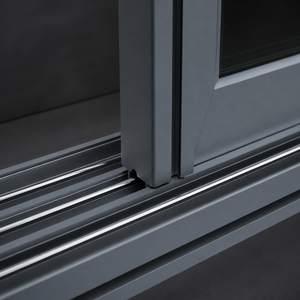 Interior Sliding
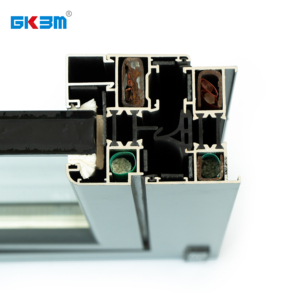 Thermal Break
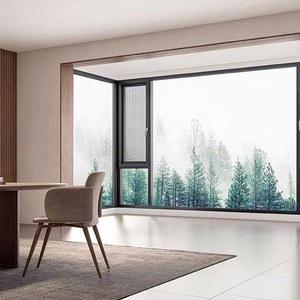 Luxury Villa
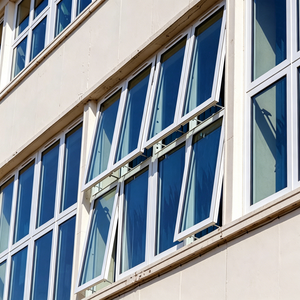 Facade Top Hung
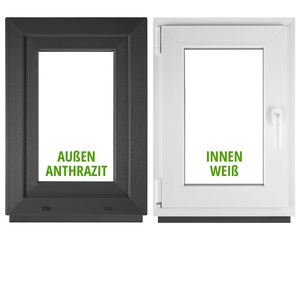 DIN Standard
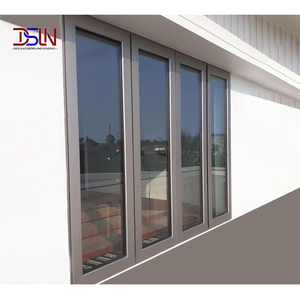 Energy Saver
CE Norm EN 14351-1 Technical Mandate & Anthracite Performance Validation
Within the modern architectural fenestration sector, Anthracite Grey (RAL 7016 / DB 703) has transitioned from an aesthetic nuance to a standardized procurement specification across high-performance residential developments, passive buildings, and institutional towers worldwide.
Exporting aluminium window assemblies into the European Union and jurisdictions recognizing stringent harmonized norms requires exhaustive compliance with EN 14351-1:2006+A2:2016. This framework stipulates continuous Initial Type Testing (ITT) and Factory Production Control (FPC) regarding air permeability, watertightness, wind resistance, and overall thermal transmittance (Uw).
Our thermal break profiles feature PA66 GF25 (25% glass fiber reinforced polyamide) barriers that reduce linear thermal transmittance (Ψ values) down to 0.031 W/mK, delivering complete whole-window U-values (Uw) as low as 0.82 W/m²K when combined with argon-filled triple Low-E glazing.
| Test Parameter | Standard | DERCHI Certified Rating |
|---|---|---|
| Air Permeability | EN 12207 | Class 4 (600 Pa) |
| Watertightness | EN 12208 | Class E1050 (1050 Pa) |
| Wind Resistance | EN 12210 | Class C5 / B5 (2000 Pa) |
| Thermal Value (Uw) | EN ISO 10077-1 | 0.82 – 1.3 W/m²K |
| Sound Attenuation | EN ISO 717-1 | Rw up to 45 dB |
| Surface Weathering | Qualicoat Class 2 | > 3,000 hrs QUV-A |
| Safety & Impact | ASTM E1886 / E1996 | Missile Level D |
Future Sourcing & Procurement Trends (2025–2030)
Strategic fenestration procurement requires global builders, quantity surveyors, and importers to foresee evolving regulatory thresholds, material certifications, and carbon tariffs.
Low-Carbon & Circular Hydro-Aluminium
Institutional procurement in the EU and North America increasingly enforces Life Cycle Assessments (LCA) and Environmental Product Declarations (EPD). Modern contracts prioritize 6063-T6 primary extrusions produced with renewable hydroelectric power and post-consumer recycled scrap, minimizing embedded Scope 3 greenhouse emissions to under 4.0 kg CO2 per kg of alloy.
Ultra-Slim Sightlines & Concealed Sashes
Architectural demand is moving toward frameless or ultra-minimal profile depths without sacrificing structural moment of inertia (Ix/Iy). Hidden casement sashes, integrated drainage channels, and concealed multi-point gearboxes (such as Siegenia or Sobinco hardware) deliver 15% greater daylight transmittance while maintaining Class 4 airtightness under extreme storm loads.
Smart Integrated Fenestration & BMS Protocols
Anthracite windows for luxury smart-homes and LEED-certified commercial properties now integrate concealed micro-actuators, magnetic contact reed switches, and electrochromic dynamic glass. These systems tie seamlessly into KNX, BACnet, and Zigbee automation networks to regulate natural night-cooling, humidity dissipation, and motorized solar heat gain coefficient (SHGC) modulation.
Evolutionary Technologies in Aluminium Fenestration
How cutting-edge alloy metallurgy, aerospace-grade thermal isolation, and automated surface treatment differentiate DERCHI from generic fabricators.
Multi-Cavity PA66 Thermal Barriers
Rather than basic flat thermal strips, DERCHI integrates multi-chamber, hollow-cavity polyamide struts filled with low-density polyolefin foam (Aerogel infused) to eliminate internal air convection inside profile cores.
Robotic Corner-Crimping & Epoxy Injection
Corner joints are mechanical-crimped with cast alloy cleating, followed by high-pressure polyurethane glue injection (Two-Component Chem-Lock). This guarantees hermetic sealing and prevents diagonal sash sag over 30 years.
Qualicoat Class 2 Fine-Structure Coating
Anthracite powder coating is applied via automated vertical electrostatic Swiss Gema spray booths using AkzoNobel Interpon D2525 fluorocarbon-grade powders, ensuring zero chalking, zero delamination, and superior UV chalk resistance.
Warm-Edge Acoustic IGU Assembly
Insulated glass units feature Swiss-made stainless/composite warm-edge spacer bars, 95% argon gas concentration, and asymmetric acoustic laminated float panes (PVB / SentryGlas acoustic interlayers) for maximum noise mitigation.
Guangdong Dejiyoupin (DERCHI) Industrial Strength
Headquartered in Foshan, China's premier fenestration cluster, DERCHI stands among the elite tier of China's Top 10 door and window manufacturers. For international contractors, developers, and fenestration distributors, our vertical integration guarantees precision tolerances, unyielding CE compliance, and seamless cross-border freight execution.
Certified Testing & Traceability
Every batch of extrusions and insulated glass units undergoes rigorous in-house lab validation: helium leak detection for argon retention, 10,000-cycle hardware fatigue cycles, and calibrated wind-tunnel testing before packing.
BIM / CAD Shop Drawing Engineering
Our dedicated structural engineering team prepares comprehensive submittal packages, static deflection calculations (Δ ≤ L/300), and custom extrusions to match your structural opening schedules without charge.
Export Crated Heavy-Transit Protection
Windows are packed in moisture-barrier film, dense edge-corner cushions, and fully enclosed fumigated plywood crates built to withstand 6-week transoceanic sea journeys and rough intermodal container transshipment.
Frequently Asked Questions by Global Importers & Contractors
Critical commercial, regulatory, and logistics answers for commercial estimators, project managers, and distributor purchasing leads.
What specific documentation accompanies DERCHI CE-certified window shipments to Europe?
Every commercial consignment exported under CE regulations includes a formal Declaration of Performance (DoP) tied directly to our Notified Body Type-Test reports under EN 14351-1. Furthermore, each unit features indelible CE marking labels identifying essential characteristics: thermal transmittance (Uw), air permeability class, watertightness, wind resistance rating, acoustic attenuation (Rw), and dangerous substance exemptions (REACH compliance).
We also deliver full structural test certificates, mill test certificates (MTC) for 6063-T6 alloy composition, and glass tempering calibration reports (EN 12150-1) to satisfy municipal building inspectors and insurance underwriters.
Why is Anthracite Grey (RAL 7016) prone to thermal expansion, and how does DERCHI prevent sash jamming?
Dark exterior finishes like RAL 7016 absorb significant solar radiation, causing external aluminium skin temperatures to reach 75°C to 80°C, while air-conditioned interior surfaces remain at 22°C. This extreme delta-T (ΔT ≈ 55°C) produces differential expansion known as the Bi-Metal Effect, which can bow tall sashes and bind perimeter locking gears.
DERCHI neutralizes this phenomenon by utilizing specialized split, slide-capable polyamide thermal barrier struts. These relief struts permit micro-shearing movement between the outer and inner aluminium profiles without losing structural integrity or air seals. Additionally, corner crimps incorporate expansion clearance margins and reinforced multi-point roller cams with 3D adjustability.
Can you accommodate bespoke architectural dimensions, custom mullion profiles, and integrated acoustic glass?
Yes. Approximately 85% of our export volume is tailored to custom architectural schedules. Our internal tooling center can design and extrude custom outer-frame extensions, sub-sills, sub-heads, and heavy structural coupling mullions for elevated wind pressures.
Regarding acoustic glazing, our automated robotic lines fabricate double and triple IGUs ranging from 24mm to 52mm overall thickness. By utilizing asymmetric glass configurations (e.g., 8mm toughened outer + 16mm argon gap + 6.76mm acoustic PVB laminated inner), we routinely achieve certified sound mitigation benchmarks exceeding 42 dB to 45 dB for urban residential facades.
What are your production lead times, minimum order quantities (MOQ), and ocean freight terms?
Standard fabrication lead time for custom powder-coated Anthracite orders is 25 to 35 business days following final CAD shop-drawing and glass schedule sign-off. For stock profiles and ongoing standardized product lines, turnaround can be compressed to 18 to 22 days.
While our manufacturing facility is optimized for Full Container Load (FCL 20GP/40HQ) commercial developments and ongoing distributor supply contracts, we support mixed sample containers and project-specific Less-than-Container Load (LCL) shipments packed in steel-reinforced crating. Typical delivery terms include FOB Foshan/Shenzhen/Guangzhou, CIF, and DDP to major worldwide sea terminals.
How does DERCHI ensure zero glass breakage and coating scuffing during intermodal maritime transport?
Fenestration export requires specialized packaging science. All anthracite aluminium surfaces are masked with custom low-tack, UV-resistant protective PE films to prevent finish abrasion from particulate vibration. Each window sash is mechanically locked in its frame with shipping spacers, wrapped in closed-cell EPE foam, and encased with high-density plastic corner protectors.
Units are then loaded vertically into solid fumigated marine plywood crates lined with waterproof membrane sheets. Heavy-gauge steel banding and internal dunnage airbags within shipping containers prevent shunting shifts, ensuring damage rates remain below 0.15% across thousands of containers delivered to Europe, Australia, and the Americas.
Connect with Our Engineering & Export Fenestration Division
Send your bill of quantities (BOQ), CAD door/window schedule, or specification parameters to receive full engineering reviews, structural calculations, and direct-from-factory pricing within 24 hours.