Choosing a reliable China Aluminum Bathroom Door supplier requires more than comparing online catalogs. Door appearance matters, but performance matters more. A well-made Aluminum Bathroom Door should resist moisture, maintain stable alignment, and operate smoothly after repeated use.
This guide examines leading Chinese suppliers through practical purchasing criteria. These include aluminum alloy grades, surface treatment, glass compatibility, hinge quality, sealing strips, production capacity, and inspection procedures. Factory experience also matters. Suppliers serving hotels, apartments, and residential projects may understand different installation conditions better. Look for clear product drawings, material reports, sample support, and documented quality controls.
Small details reveal a supplier’s professionalism. Check whether the frame corners meet cleanly. Ask how the anodized or powder-coated finish is tested. Confirm packaging methods, because damaged edges can appear after long-distance shipping. Lead times, minimum order quantities, replacement policies, and communication speed deserve equal attention. They affect real project costs.
No ranking is perfect. A supplier with an impressive website may still provide weak after-sales support. Another factory may have fewer marketing materials but stronger workshop discipline. This guide therefore focuses on evidence, not promises. It considers customer feedback, manufacturing experience, export capability, customization options, and compliance documentation where available.
Buyers should request samples before approving large orders. Compare frame thickness, door weight, closing resistance, drainage design, and surface consistency by hand. Do not rely on photographs alone. The best China Aluminum Bathroom Door supplier is not always the cheapest or largest. It is the partner that communicates clearly, controls production carefully, and delivers a dependable product for the intended environment. Some uncertainty remains, and careful verification is still necessary.
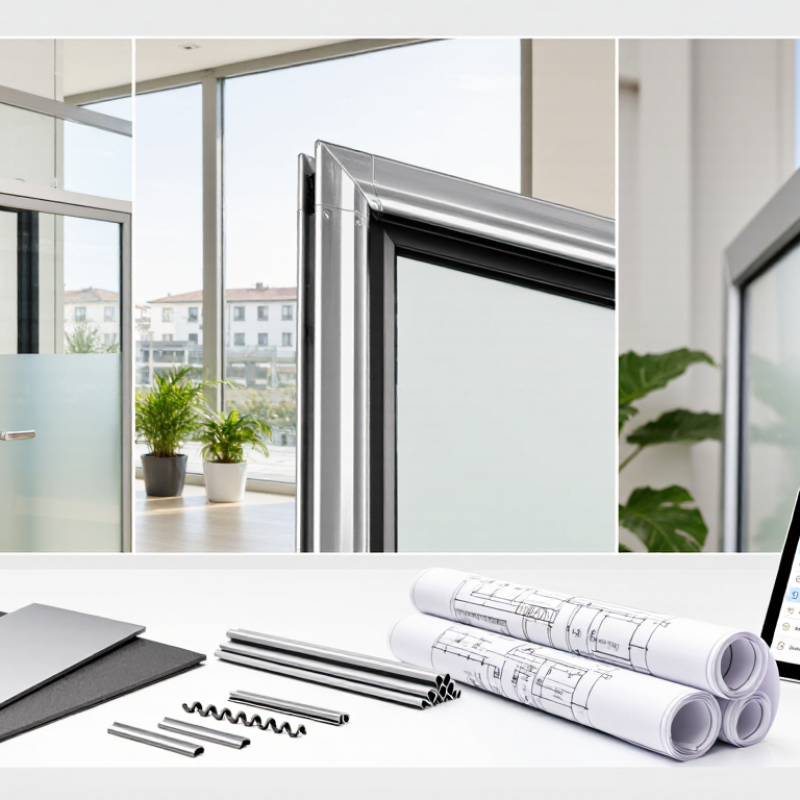
China’s aluminum bathroom door market is supported by a deep extrusion and finishing supply chain. The International Aluminium Institute reported that China produced about 41.6 million tonnes of primary aluminum in 2023. That represented roughly 59% of global output. This scale helps suppliers source frames, profiles, hinges, and hardware competitively.
But volume is not quality.
The strongest suppliers usually control several stages, from profile cutting to anodizing and final inspection. Buyers should request alloy specifications, coating thickness, glass safety documents, and water-resistance test records. The China National Bureau of Statistics reported continued growth in manufacturing investment during 2023, yet factory capability remains uneven. Some workshops use precise CNC cutting, while others still depend heavily on manual fitting.
Price comparisons can mislead.
Industry estimates for China’s bathroom door segment vary because trade data often combines doors with wider aluminum building products. That limitation matters. A low quotation may exclude packaging, replacement parts, mold charges, or inspection costs. In practical sourcing, sample doors reveal more than catalog images. Check corner joints, drainage gaps, handle movement, and seal compression under repeated use.
The most reliable supplier profile combines documented production capacity, stable export procedures, and responsive engineering support.
Certifications help, but they do not replace factory evidence. One overlooked detail remains common: attractive finishes can deteriorate quickly in humid bathrooms when pretreatment is weak. Supplier evaluation should therefore compare test results, not promises.
China’s aluminum bathroom door suppliers commonly produce sliding, hinged, pivot, and folding systems. Sliding doors suit narrow bathrooms because they need little swing clearance. Hinged doors provide a wider opening, but require careful floor planning. Pivot models create a cleaner entrance and often use thicker tempered glass.
Material choice matters. The International Aluminium Institute reports that recycled aluminum requires about 5% of the energy used for primary aluminum production. This supports aluminum’s resource-efficiency advantage, although recycled content should be verified with supplier documentation. Look for 6063-grade aluminum, powder-coated or anodized surfaces, stainless-steel rollers, and EPDM seals. These details help resist humidity, staining, and repeated movement. Not every attractive finish performs equally well. Dark coatings may reveal water spots faster.
Tips: Ask for coating thickness, glass certification, hardware load ratings, and a salt-spray test report based on ISO 9227. Request installation drawings before ordering. Measure the wall opening twice. A 3–5 millimeter error can affect sealing and alignment. Also check whether replacement rollers and seals are available locally. Market reports from Grand View Research continue to identify aluminum doors and windows as a growing construction segment, but growth figures do not guarantee bathroom-specific quality. A supplier’s production scale is useful. It is not proof of better waterproofing. Test samples under real shower conditions when possible.
The top China aluminum bathroom door suppliers are not chosen by price alone. A reliable evaluation begins with the factory’s experience in wet-room products, not general metalwork. Ask for recent project photos, production videos, and references from comparable buyers. Check whether the supplier controls cutting, welding, coating, glass fitting, and final inspection.
Request a physical sample before placing a large order. Examine the frame corners, hinge alignment, drainage gap, and seal compression. Poorly fitted seals may allow water into the wall after repeated use. Ask for the aluminum alloy grade, wall thickness, surface-treatment method, and hardware specifications. Powder coating should appear even under bright light, without pinholes, scratches, or exposed edges. Small defects matter.
Documentation reveals professionalism. A dependable supplier should provide drawings, packing details, inspection records, and clear tolerances. Confirm how they handle damaged cartons, replacement parts, and delayed shipments. Communication also deserves testing. Send the same technical questions to several suppliers and compare the accuracy of their replies. Fast answers are not always good answers. Some factories promise too much before checking production capacity, which is a warning sign. I have found that a modest sample delay can reveal more than a polished sales presentation. Review payment terms, product compliance requirements, and export documents with qualified professionals before ordering. Supplier evaluation is never perfect. Keep written records, inspect before shipment, and leave room for honest revision.
The chart presents a neutral 100-point framework for evaluating China-based aluminum bathroom door suppliers. Product quality and water resistance receive the highest weighting because bathroom doors must withstand frequent moisture exposure. Buyers should verify each category through test reports, samples, factory audits, certifications, and written commercial terms rather than relying only on supplier claims.
What Are the Top China Aluminum Bathroom Door Suppliers?
China’s leading aluminum bathroom door suppliers usually combine profile extrusion, glass processing, and final assembly. Their strongest advantage is production control. Some operate dedicated workshops for cutting, drilling, powder coating, and hardware installation. This reduces measurement errors between separate factories.
Experienced suppliers offer several door profiles, including sliding, hinged, and folding designs. They may provide 6063 aluminum frames, tempered glass, stainless steel rollers, and moisture-resistant seals. Manufacturing quality depends on more than attractive samples. Buyers should inspect corner joints, coating thickness, drainage gaps, and repeated opening tests. A reliable supplier can share inspection records, material specifications, and production photographs. Ask for evidence.
Supplier capabilities differ considerably. Some support custom sizes and small trial orders, while others focus on high-volume projects. Strong factories use digital cutting equipment and controlled coating lines. They also maintain clear procedures for incoming material checks and final packaging. However, factory descriptions can sound better than daily practice. An independent inspection remains valuable, especially before shipment.
Tips: Request a physical sample before approving mass production. Compare frame tolerances, glass edges, handle strength, and seal compression. Confirm packaging details for corners and hardware. Clarify replacement procedures for damaged parts. Do not judge suppliers by showroom images alone. Ask how they handle mistakes.
Choosing China aluminum bathroom door suppliers requires more than comparing unit prices. The International Aluminium Institute reported about 70.6 million tonnes of global primary aluminium production in 2023. This scale supports broad material access, but it does not guarantee consistent profiles or finishing. Request alloy certificates, profile drawings, coating specifications, and a traceable production schedule. Confirm whether the quoted price includes packaging, spare hardware, inspection, and export documentation. Incoterms 2020 should define who pays freight, insurance, customs clearance, and destination charges.
Quality control should begin before mass production. Approve one signed sample, then inspect profile dimensions, corner joints, seals, glass fit, drainage holes, and door-cycle performance. For humid bathrooms, check coating adhesion and corrosion resistance through suitable laboratory testing, such as ISO 9227 salt-spray procedures. Independent inspection is valuable. A factory video is not enough. The World Bank’s 2023 Logistics Performance Index gave China a score of 3.7, ranking it 19th globally, but local port congestion can still change delivery estimates. Allow buffer time.
Tips: Put every tolerance in the purchase contract. Specify carton strength and moisture protection. Ask for photos before loading. Verify the HS code with your customs broker, because bathroom doors may be classified differently by construction, material, or hardware. I have seen attractive samples hide weaker hinges and uneven anodizing. That risk deserves a second inspection, not optimistic assumptions. Samples can mislead.
| Evaluation Area | Data Dimension | Typical Specification or Range | Recommended Requirement | Verification Method | Priority |
|---|---|---|---|---|---|
| Product Configuration | Aluminum frame material | Commonly 6063-T5 or 6063-T6 extruded aluminum | Confirm alloy, temper, profile dimensions, and applicable material standard before production. | Review mill certificate, profile drawings, and random dimensional inspection. | High |
| Product Configuration | Frame wall thickness | Often approximately 1.0–2.0 mm, depending on the profile and door size | Specify the minimum wall thickness rather than accepting only a nominal profile description. | Measure cut sections with a calibrated vernier caliper or wall-thickness gauge. | High |
| Product Configuration | Surface treatment | Powder coating, anodizing, or liquid coating | Define color reference, gloss level, coating thickness, pretreatment, and allowable visual defects. | Use coating-thickness testing, color comparison, adhesion testing, and visual inspection. | High |
| Product Configuration | Glass option | Tempered safety glass is commonly available in approximately 5–8 mm thicknesses | State glass thickness, edge finish, safety marking, tolerance, and whether laminated glass is required. | Check glass markings, thickness, edge condition, and supplier test documentation. | High |
| Ordering | Minimum order quantity | Varies by design, finish, glass type, and customization; standard items generally have lower requirements | Request separate quantities for standard models, custom profiles, custom colors, and custom packaging. | Obtain a written quotation with model-level MOQ, tooling charges, and setup fees. | High |
| Ordering | Sample approval | Usually one functional sample plus approved drawings and finish samples | Approve dimensions, opening direction, hardware, glass, finish, packaging, and installation details in writing. | Sign a sample approval sheet and attach approved photos or technical drawings to the purchase order. | High |
| Ordering | Tooling and development | Custom aluminum extrusion dies may involve a separate one-time charge and development period | Clarify die ownership, storage period, reuse rights, modification fees, and refund conditions. | Include tooling terms, technical drawings, and payment milestones in the sales contract. | Medium |
| Ordering | Production lead time | Commonly about 25–60 calendar days after approval, depending on customization and order volume | Separate lead times for sampling, extrusion, finishing, glass processing, assembly, and packing. | Request a production schedule and written notice procedure for delays. | High |
| Quality Control | Dimensional tolerance | Must be defined by the approved drawing; door and frame tolerances should not be assumed | Specify finished width, height, squareness, diagonal difference, gap, and hardware position tolerances. | Use a calibrated tape measure, caliper, angle tool, and diagonal measurement during inspection. | High |
| Quality Control | Door operation | Door should open, close, latch, and seal smoothly without binding or abnormal noise | Test representative units through repeated opening and closing cycles before shipment. | Perform functional checks on assembled units and record failures with photographs. | High |
| Quality Control | Corrosion resistance | Performance depends on alloy, pretreatment, coating system, humidity, and exposure conditions | Match the finish and test requirement to the bathroom environment and destination climate. | Review relevant coating test reports and inspect pretreatment and surface uniformity. | High |
| Quality Control | Hardware material | Common options include stainless steel, aluminum, zinc alloy, and coated steel | Specify grade, finish, load capacity, fastener material, and replacement-part availability. | Verify material declarations, dimensions, operation, and corrosion condition on samples. | High |
| Quality Control | Water management | Design may include seals, thresholds, drainage channels, or splash-control details | Confirm that the design suits the intended wet-area layout and local installation practice. | Conduct a controlled water-spray or leakage check where applicable to the door design. | High |
| Inspection | Pre-shipment inspection level | Inspection may be based on agreed sampling plans such as ANSI/ASQ Z1.4 | Set the inspection level, acceptable quality limit, critical defects, major defects, and minor defects in advance. | Use an independent inspection company or trained internal inspector before final payment. | High |
| Packaging | Protection for international transport | Typically includes protective film, corner protection, separators, cartons, pallets, or crates | Require protection against scratching, glass impact, moisture, compression, and mixed-part movement. | Inspect packed samples, drop-risk points, carton strength, labels, and container loading photos. | High |
| Import | Trade term | Common choices include EXW, FOB, CIF, and DAP; responsibilities differ by term | Confirm who handles export clearance, main freight, insurance, import clearance, duties, and inland delivery. | Compare quotations using the same Incoterm, destination, currency, and cost inclusions. | High |
| Import | Shipping documentation | Usually includes commercial invoice, packing list, transport document, and origin documents when required | Ensure quantities, descriptions, weights, package counts, and consignee details match across documents. | Review draft documents before shipment and confirm destination-country customs requirements. | High |
| Import | HS classification and duties | Classification depends on the product's materials, construction, and destination-country tariff rules | Obtain a customs classification decision or broker confirmation before placing a large order. | Check the destination customs tariff database and retain the classification rationale. | High |
| Import | Compliance documentation | Requirements vary by destination and may cover glass safety, building products, packaging, or labeling | Identify mandatory standards and testing requirements before finalizing the design. | Request test reports, declarations, labels, and installation instructions applicable to the market. | High |
| Commercial Terms | Payment protection | Payment structures vary; a deposit with balance after inspection is commonly negotiated | Link the final payment to approved inspection results, complete documents, and shipment readiness. | Use a written contract covering defects, replacement parts, claims, delay remedies, and dispute resolution. | High |
| After-Sales | Spare parts and warranty support | Important parts may include rollers, hinges, seals, handles, locks, and touch-up materials | Define warranty duration, exclusions, response time, spare-part pricing, and replacement procedure. | Request a spare-parts list and verify that replacement components are compatible with the approved model. | Medium |
Note: The ranges and practices shown are general industry planning references. Final specifications, testing, customs classification, and compliance obligations should be confirmed against the approved product design and the regulations of the destination market.
Check experience with wet-room doors, not only general metalwork. Request recent project photos, production videos, and buyer references. Similar projects matter.
Examine frame corners, hinge alignment, drainage gaps, and seal compression. Open and close the door repeatedly. Look for wobbling or uneven contact.
Request the aluminum alloy grade, wall thickness, surface treatment, and hardware specifications. Ask for profile drawings and coating details. Avoid vague descriptions.
Inspect the surface under bright light. Look for pinholes, scratches, exposed edges, and uneven color. Small defects may grow in humid bathrooms.
Request drawings, packing details, inspection records, tolerances, and a production schedule. Confirm replacement parts and damaged-carton procedures. Missing documents worry me.
Approve one signed sample before production begins. Check dimensions, corner joints, seals, glass fitting, drainage holes, and door-cycle performance. Inspect again before shipment.
State every tolerance, carton strength, moisture protection, packaging contents, and spare hardware. Define freight, insurance, customs clearance, and destination charges clearly.
Confirm the product classification with a qualified customs broker. Request loading photos and allow extra delivery time. Ports can create unexpected delays.
No. An independent inspection provides stronger evidence. Attractive samples can hide weak hinges or uneven finishing. I may be too cautious, but a second inspection helps.
China’s Aluminum Bathroom Door supplier market includes manufacturers specializing in residential, commercial, and project-based applications. Their product ranges may include sliding, hinged, folding, and framed or frameless doors, with features such as corrosion resistance, lightweight construction, moisture protection, tempered glass options, customizable finishes, and efficient space use. Understanding these product types helps buyers match door designs with different bathroom layouts, climate conditions, and installation requirements.
When evaluating China-based suppliers, buyers should review manufacturing experience, material standards, production capacity, customization services, communication, and quality management procedures. A reliable supplier should provide clear specifications, samples, inspection support, secure packaging, and consistent delivery performance. Before placing an order, customers should confirm dimensions, hardware, surface treatment, packaging, payment terms, shipping arrangements, import documentation, and applicable safety requirements. Careful factory assessment and quality control can reduce risks and support smooth international purchasing.