0%

Choosing among the 10 best Aluminium Doors and Windows manufacturers in 2026 takes more than comparing frame colors and catalog prices. Buyers need to examine thermal performance, hardware quality, finish durability, testing evidence, and the supplier’s ability to meet project dimensions. Small details matter: a clean corner joint, a smooth-running sliding panel, and seals that sit evenly can reveal how carefully a system is made.

The U.S. Department of Energy’s Energy Saver guidance estimates that windows account for 25–30% of residential heating and cooling energy use. That figure is not a guarantee of savings from any single product; climate, installation, and building design all matter. Building scientist Joseph Lstiburek’s often-cited reminder, “windows are holes in walls,” is blunt for a reason. Even a premium aluminum frame cannot compensate for poor glazing choices or careless installation. A useful comparison should therefore look beyond glossy product photos.

This guide examines manufacturers through practical criteria: product range, design flexibility, documented performance, manufacturing capability, and support after purchase. It also considers finish options, thermal-break systems, and the availability of project-specific specifications. Not every company will suit every building. That is worth saying plainly. A manufacturer with impressive brochures may still be a poor fit if technical documents are hard to obtain or lead times do not match the project. The strongest shortlist is one buyers can verify, question, and compare.
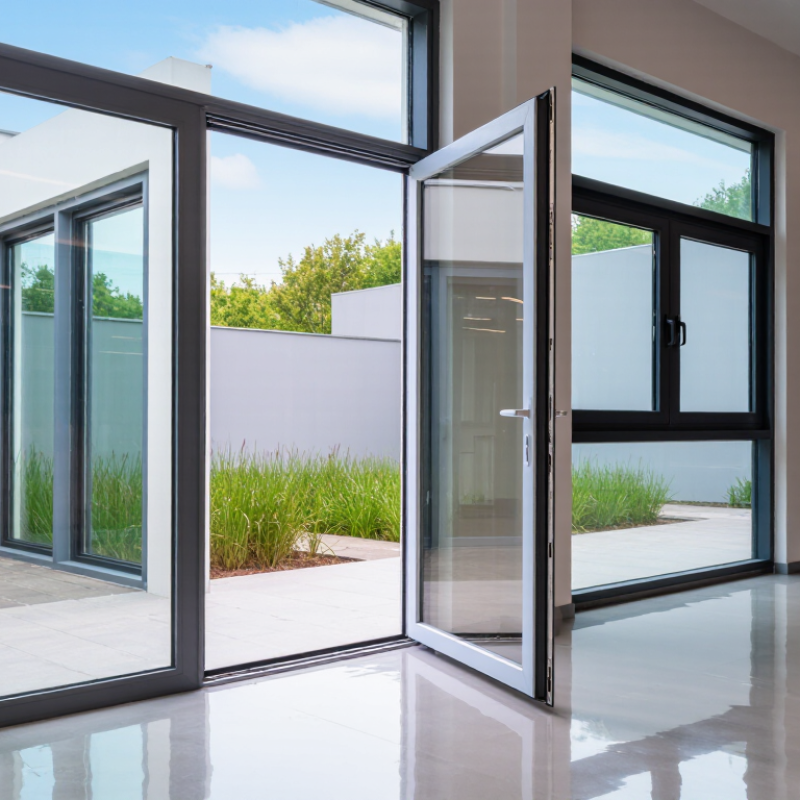
10 Best Aluminium Doors and Windows Manufacturers in 2026

How Aluminium Door and Window Manufacturers Are Evaluated in 2026

Evaluating aluminium door and window manufacturers in 2026 requires more than comparing catalogue prices. Buyers should examine documented performance for air leakage, water penetration, wind resistance, thermal transfer, and sound reduction. Ask for test reports that match the product configuration, not just a similar-looking sample. Small differences in glazing, seals, frame depth, and installation can change results. Details matter.

Factory quality is visible in consistent corner joints, smooth hardware operation, even coating, and carefully protected profiles. Request sample sections and inspect how drainage channels and thermal breaks are designed. Also check whether the manufacturer explains material specifications, quality checks, production capacity, and expected lead times clearly. A polished brochure is not proof. It is only a starting point.

Reliable evaluation includes what happens after delivery. Review warranty terms, replacement-part access, installation guidance, and response times for service questions. Where relevant, verify that testing and environmental claims come from traceable documents or independent assessments. Compare quotes line by line; excluded fittings or installation support can make a low price misleading. Still, no checklist removes every risk. A factory visit may reveal more than a sales call, but even that offers only a snapshot. Ask for references from projects with similar climates, building types, and usage before making a decision.

10 Best Aluminium Doors and Windows Manufacturers in 2026 - How Aluminium Door and Window Manufacturers Are Evaluated in 2026
Evaluation method: The comparison framework weights product range (20%), thermal performance evidence (20%), testing and compliance documentation (20%), customization (15%), quality-control practices (15%), and service and warranty information (10%). Scores are illustrative benchmark examples, not verified ratings or claims about specific manufacturers. Replace them with independently checked company data before publication.
Rank Anonymous Entry Product Range
20%
Thermal Evidence
20%
Testing & Compliance
20%
Customization
15%
Quality Control
15%
Service & Warranty
10%
Weighted Score
out of 100
Evidence to Check
1Anonymous Entry 015.0 / 55.0 / 55.0 / 54.5 / 54.5 / 54.0 / 595.0Product catalogue, test reports, warranty terms
2Anonymous Entry 024.5 / 55.0 / 55.0 / 54.0 / 54.5 / 54.5 / 592.5Whole-window performance data and applicable standards
3Anonymous Entry 034.5 / 54.5 / 55.0 / 54.5 / 54.5 / 54.0 / 591.0Accredited test documentation and product specifications
4Anonymous Entry 044.5 / 54.5 / 54.5 / 55.0 / 54.5 / 54.0 / 590.5Available sizes, finishes, configurations, and options
5Anonymous Entry 054.5 / 54.5 / 54.5 / 54.0 / 55.0 / 54.5 / 590.0Inspection procedures, traceability, and warranty coverage
6Anonymous Entry 064.0 / 54.5 / 54.5 / 54.5 / 54.5 / 54.5 / 588.0Installation guidance, after-sales terms, and test scope
7Anonymous Entry 074.0 / 54.5 / 54.5 / 54.0 / 54.5 / 54.5 / 586.5Product-level certificates and service response process
8Anonymous Entry 084.5 / 54.0 / 54.5 / 54.0 / 54.0 / 54.5 / 585.0U-value basis, hardware details, and warranty exclusions
9Anonymous Entry 094.0 / 54.0 / 54.5 / 54.5 / 54.0 / 54.5 / 584.5Configuration limits, compliance records, and service terms
10Anonymous Entry 104.0 / 54.0 / 54.0 / 54.5 / 54.5 / 54.0 / 583.0Current product documents, quality checks, and support coverage
Scoring scale: 1 = limited documented evidence; 3 = adequate evidence; 5 = comprehensive, current, and independently verifiable evidence. Thermal ratings should be checked against the stated test method and the complete window or door configuration; performance can vary by size, glazing, frame, and hardware.

Profiles of the 10 Best Aluminium Door and Window Manufacturers

Profiles of the ten manufacturers should compare practical strengths, not just polished product photos. One may stand out for thermally broken frames; another for coastal-grade finishes or tested high-rise systems. Other useful distinctions include custom sizing, acoustic performance, recycled-metal sourcing, fabrication consistency, slim sightlines, and after-sales support. Look for evidence: test results, finish specifications, warranty terms, and clear installation guidance. Claims alone are not enough.

Energy performance deserves close attention. The 2024 Global Status Report for Buildings and Construction, published by the Global Alliance for Buildings and Construction, estimates that buildings and construction account for 32% of global energy use and 34% of energy-related CO2 emissions. A well-designed window can support better building performance, but glazing, installation, and local climate matter too. Frame specifications cannot tell the whole story.

Material sourcing is another useful comparison. The International Aluminium Institute reports that recycling aluminium uses about 5% of the energy required for primary production. Ask whether a manufacturer documents recycled content and tracks material quality. Some profiles may offer excellent thermal details but limited regional service. That trade-off matters. Rankings also have limits: project needs differ, and the most expensive system is not always the best fit.

Aluminium Extrusion Strength Benchmarks for Door and Window Profiles

Representative minimum mechanical-property values for 6063 aluminium extrusions. T6 temper has higher tensile and yield strength than T5; actual requirements vary by profile thickness and governing specification.

Values shown in MPa. Reference: ASTM B221 / Aluminum Association data for 6063 extrusions; verify applicable limits for the specific product and thickness.

Comparing Product Ranges, Design Options, and Technical Capabilities

Comparing aluminium door and window manufacturers means looking beyond catalogue size. Some focus on slim-frame sliding systems, while others offer casement, tilt-and-turn, folding, and entrance-door options. Check whether matching profiles are available across the home; a narrow sliding frame beside a bulky window can disrupt the overall design. Ask for sample corners and finish swatches. A small colour chip may look different across a large, sunlit façade.

Technical details matter just as much. Compare published thermal performance, air leakage, water resistance, and wind-load ratings, using the same test conditions where possible. “Thermally broken” alone does not tell you how a complete window will perform. Frame depth, glazing thickness, gaskets, drainage paths, and installation details all affect the result. Ask how the system handles local weather and whether replacement hardware remains available. Look closely.

A practical shortlist should include product range, custom sizing, finish choices, documented testing, and installation support. Manufacturers may present specifications differently, so direct comparisons are not always tidy. That is a limitation worth admitting. A polished brochure cannot replace a project-specific drawing or a clear written warranty. A little skepticism helps.

Assessing Quality, Sustainability, Customer Service, and Market Reach

For a 2026 manufacturer comparison, judge evidence, not showroom polish. Ask for independently tested whole-window U-values, air leakage, water resistance, and structural performance. A slim frame may look elegant, but a weak thermal break can leave cold edges and condensation. Small details matter. Check whether test results match the exact frame, glass, and hardware being offered.

Sustainability claims need numbers. The 2024 Global Status Report for Buildings and Construction, published by UNEP and GlobalABC, attributes 32% of global energy use and 34% of energy-related carbon emissions to the sector. The International Aluminium Institute says recycling aluminium can use up to 95% less energy than producing primary metal. Ask manufacturers to disclose recycled content and explain how it is verified. Recycled content alone is not a full sustainability assessment.

Customer service and market reach show up after installation. Request clear warranty terms, local technical support, replacement-part availability, and realistic delivery estimates. Ask how installers are trained and how service requests are tracked. Response time matters. A wide distribution network can help, but it does not guarantee dependable support in your region. I would also compare references from projects with similar climates and building types; published performance data rarely captures every on-site problem.

Choosing the Right Manufacturer for Your Project

Choosing the right aluminium door and window manufacturer means matching tested performance to your project, not simply comparing frame prices. Start with climate, building orientation, opening sizes, and local installation conditions. The U.S. Department of Energy’s Energy Saver guidance estimates that windows account for 25–30% of residential heating and cooling energy use. That makes verified U-factor and solar heat gain coefficient values more useful than broad claims such as “energy efficient.” Small details matter.

Ask for test documentation covering air leakage, water penetration, and structural performance for the relevant product configuration. A rating for one frame size or glass package may not apply to your full order. Check thermal breaks, glazing options, drainage paths, hardware availability, and warranty terms. Also confirm who handles site measurements and installation coordination. A polished brochure can still leave gaps; specifications, lead times, and after-sales responsibilities should be clear in writing.

Tips: Request sample test reports and a project-specific quotation. Compare equivalent glass and frame configurations, not headline prices. Ask how the manufacturer manages damaged units and replacement parts. Then check whether the proposed system suits your installers and the building’s exposure. Do not overlook the awkward corner cases.

FAQS

What performance documents should I request?

Ask for test reports covering air leakage, water penetration, wind resistance, thermal transfer, and sound reduction. Match them to the exact frame, glass, seals, and hardware. Details matter.

How can I inspect factory quality?

Examine sample sections, corner joints, coating, and hardware movement. Check drainage channels and thermal breaks. A polished brochure proves little.

Why should quotes be compared line by line?

A low price may exclude fittings, installation guidance, or service support. Compare each item before judging the total. Not always obvious.

What should I check about energy performance?

Request whole-window U-values and confirm the tested configuration matches your project. Glazing, installation, and local climate also affect results.

How can I assess sustainability claims?

Ask for documented recycled content and an explanation of how it is verified. Recycling aluminium can use up to 95% less energy than producing primary metal. That alone does not settle the question.

What customer-service details matter after delivery?

Review warranty terms, local technical support, replacement-part access, and realistic delivery estimates. Ask how service requests are tracked. Response time matters.

Are rankings enough to choose a manufacturer?

No. Project needs differ, and a higher price does not guarantee a better fit. Regional service can be limited, too.

What can a factory visit tell me?

It may reveal production details, but it is only a snapshot. I would also check references from similar buildings and climates; site problems can still surprise you.

Conclusion

This guide explores how the leading aluminium door and window manufacturers of 2026 can be evaluated, from product quality and engineering expertise to design flexibility, sustainability, customer support, and international reach. It outlines the strengths buyers may look for across a range of manufacturers, including varied product selections, customization options, technical capabilities, and the ability to meet different project requirements.

By comparing these factors, readers can better understand which supplier may suit a residential, commercial, or large-scale development. The guide also considers practical questions such as performance needs, project scope, service expectations, and long-term value. With a clear comparison of Aluminium Doors And Windows options, buyers can make a more informed choice based on their priorities rather than relying on a single feature or claim.

Ethan

Ethan

Ethan is a dedicated marketing professional with a deep understanding of the company’s products, customers, and industry landscape. With a strong combination of strategic thinking, market insight, and clear communication, he helps present complex product features in practical and engaging ways. His......