An Aluminum Door is more than a lightweight entrance with a modern finish. It combines aluminum profiles, glass or panels, hinges, locks, seals, and installation details. Each part affects comfort, security, durability, and appearance.
Fenestration consultant John R. Lewis says, “A door performs only as well as its frame, hardware, and installation.” That practical warning deserves attention. A beautifully powder-coated frame can still leak air when the sill is poorly fitted. It may also rattle after repeated use. This is where professional experience matters.
Common types include hinged Aluminum Door systems, sliding doors, folding doors, pivot doors, and commercial storefront doors. Hinged models suit entrances requiring a strong seal. Sliding systems save space and bring wider views. Folding designs can open large areas, although their hardware needs careful adjustment. Thermal-break doors include an insulating barrier inside the frame. They generally offer better energy performance than basic aluminum profiles.
The right choice depends on climate, opening size, traffic, glazing, drainage, and local building requirements. Coastal projects need corrosion-resistant finishes and suitable fasteners. Busy retail entrances need durable closers and replaceable hardware. Residential projects may prioritize quiet operation and thermal comfort.
The attractive option is not always the practical one. Check tested performance, warranty terms, profile thickness, and installer qualifications before choosing. A reliable Aluminum Door should feel stable, close evenly, and resist drafts for years.
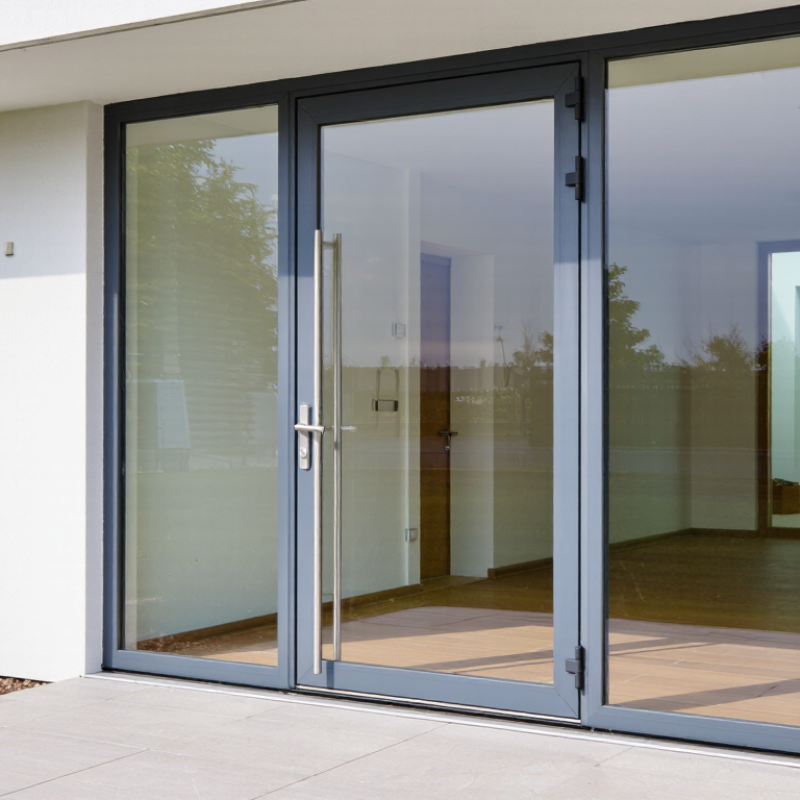
Definition and Core Features of Aluminum Doors
What Is an Aluminum Door and What Types Are Available?
An aluminum door is an entrance system built around lightweight, extruded metal profiles. Its frame supports glass, panels, hinges, rollers, locks, and weather seals. Aluminum offers strong structural performance with relatively low weight. It also resists rust and keeps its shape in changing weather. That strength is not magic. Without thermal breaks, aluminum can transfer outdoor heat quickly. Polyamide barriers, insulated panels, and compression seals help reduce this weakness. The U.S. Department of Energy reports that windows alone account for 25–30% of residential heating and cooling energy use. Doors deserve similar attention because they form part of the building envelope.
Common types include hinged entry doors, sliding patio doors, lift-and-slide systems, pivot doors, and framed glass storefront doors. Hinged models suit compact entrances and frequent traffic. Sliding doors save swing space and create wider visual openings. Lift-and-slide hardware improves panel movement, but it needs accurate installation and regular adjustment. Pivot doors create a bold appearance, although their hinges and seals require careful engineering. Glass selection also matters. Double glazing, low-emissivity coatings, and warm-edge spacers can improve thermal performance.
The International Aluminium Institute states that recycled aluminum requires about 5% of the energy used for primary production. This supports material recovery, but recycling still depends on collection and separation. An aluminum door is not automatically energy efficient. Product specifications should show U-factor, air leakage, water penetration, and wind-load results. Correct dimensions matter too. A small installation gap can cause drafts, noise, or water entry. Shiny finishes are attractive, but measured performance matters more.
FAQS
Hollow aluminum profiles are extruded through shaped dies at high temperatures. Sections are cut, joined, and reinforced around the opening. The inside matters.
Common options include hinged, sliding, folding, and pivot doors. Each type uses different profiles and hardware layouts. Space changes everything.
Thermal breaks reduce heat transfer between exterior and interior aluminum sections. Insulating glass, seals, spacers, and drainage channels also influence performance. Metal thickness alone is insufficient.
Yes, sliding doors move along tracks without using swing space. They suit patios, balconies, and narrow hallways. Keep tracks clean.
Remove dust and small stones from the track regularly. Debris can make heavy panels difficult to move. This detail is easy to miss.
Consider opening size, traffic, drainage, climate, security, and available floor space. A hinged door often seals simply, while a sliding door saves room. Measure carefully.
Yes, low-emissivity and double glazing can improve comfort and reduce heat transfer. Glass also affects daylight, noise control, and cooling demand. Large glass needs care.
Yes, incorrect measurements, poor sealing, and blocked sill drainage can cause drafts or water entry. A strong frame cannot fix every installation mistake. I would verify the threshold twice.
Conclusion
An Aluminum Door is a durable, lightweight entrance solution made from engineered aluminum frames that combine strength, corrosion resistance, and a clean modern appearance. Its construction typically includes hollow or reinforced profiles, protective finishes, hinges, locks, seals, and an infill such as glass, panels, or insulated materials. This structure allows aluminum doors to remain stable in changing weather while supporting practical energy and security performance.
Common types include hinged doors, sliding doors, folding doors, and automatic options, each suited to different spaces and usage needs. Hinged models work well for homes and offices, while sliding and folding designs help connect rooms, balconies, patios, and commercial areas without taking up much swing space. When choosing an Aluminum Door, consider its dimensions, frame strength, glazing or panel type, insulation, weather sealing, security hardware, maintenance requirements, operating style, and overall appearance. The best choice should match the building’s function, local climate, available space, and long-term performance expectations.